The New Currency of Privilege: Why the World's Most Discerning Travelers Are Choosing Access Over Applause
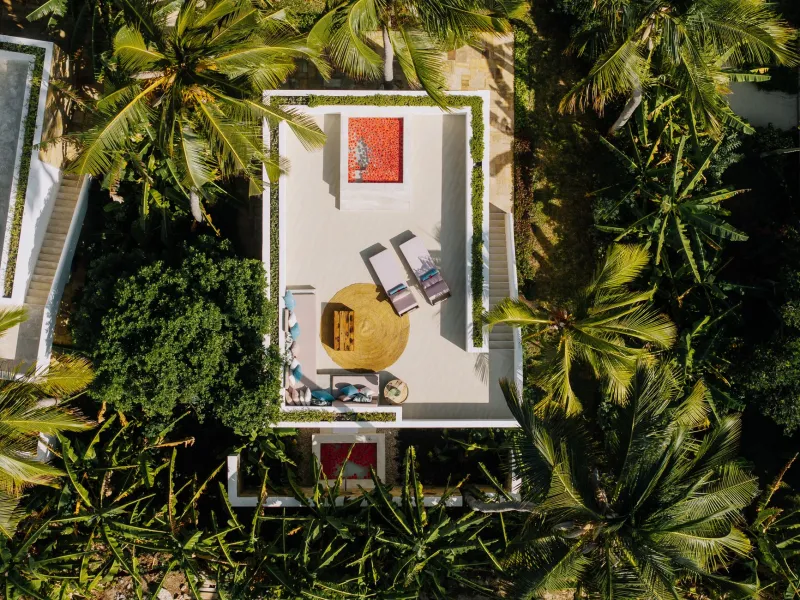
There was a time, not so long ago, when the measure of a remarkable journey was its shareability. The rooftop infinity pool overlooking a recognizable skyline. The Michelin-starred tasting menu photographed in flattering candlelight. The private villa whose coordinates were casually dropped into conversation at the right dinner party. For a certain generation of affluent traveler, visibility was the point — proof, rendered in pixels, that one had arrived.
That era is quietly, deliberately ending.
Among the most discerning travelers moving through the world today, a different philosophy has taken hold — one that prizes inaccessibility over influence, and depth of experience over breadth of audience. Call it invisible luxury: the art of curating a travel life so rarefied, so genuinely exclusive, that its greatest achievement is remaining entirely undocumented.
The Retreat from the Recognizable
The shift is not merely aesthetic. It is, at its core, a recalibration of what exclusivity actually means in an age when nearly every celebrated destination has been democratized by the algorithm.
"When a boutique property in Tulum or a tucked-away riad in Marrakech appears in the same Instagram carousel as a mid-range hotel chain, something essential has been lost," observes one New York-based luxury travel advisor who counts several Fortune 500 executives among her clientele. "My clients are no longer asking where they should go. They are asking where almost no one else has been — and more importantly, where almost no one else will know they went."
This appetite for the genuinely obscure is reshaping itineraries at the highest levels of the market. Increasingly, elite travelers are bypassing the canonical luxury circuit — the Amalfi Coast in August, the Maldives in peak season — in favor of destinations that require not just financial resources, but the rarer currency of insider knowledge. A privately leased island off the coast of Maine. A restored feudal estate in Slovenia's Soča Valley, accessible only through a single, invitation-gated property management group. A small-ship expedition to the Faroe Islands, with a guest roster capped at twelve.
The common thread is not remoteness for its own sake, but rather the structural impossibility of mass participation.
When Invitation Is the Amenity
Perhaps nowhere is this philosophy more pronounced than in the rise of invitation-only travel collectives and members-only expedition houses — organizations that operate with the deliberate opacity of a private club.
Several such entities have emerged in recent years catering specifically to American travelers who have grown weary of luxury brands that market exclusivity while quietly expanding their footprint. These collectives, whose names circulate only through personal referral, offer access to properties and experiences that are never listed publicly: a working vineyard in Burgundy where the winemaking family hosts a maximum of four guests per harvest season; a private conservation reserve in Botswana where the annual guest count is intentionally kept below one hundred; a centuries-old palazzo in Venice whose owners open it to vetted visitors for no more than three weeks each year.
"The invitation is the amenity," explains one boutique hotelier whose Umbrian property operates on a referral-only basis. "Before a guest ever arrives, they already understand that what they are receiving is not something that can be purchased through a standard booking channel. That understanding changes everything about how the experience is received."
For American travelers accustomed to a hospitality culture that prizes frictionless access, this deliberate gatekeeping represents a meaningful psychological shift. The value is not simply in the quality of the linens or the provenance of the wine list. It is in the knowledge that the experience has been specifically, intentionally withheld from nearly everyone else.
The Undocumented Journey as a Form of Refinement
Equally significant is the growing practice among high-net-worth travelers of choosing experiences specifically designed to remain unrecorded. This is not technophobia, nor is it a performative rejection of social media. It is something more considered: a recognition that the act of documentation fundamentally alters the nature of experience itself.
Several ultra-luxury operators have begun building this philosophy directly into their offerings. Some properties now enforce a strict no-photography policy in their most intimate spaces — not as a restriction, but as a selling point. Guests are encouraged, even coached, to engage with their surroundings without the mediating lens of a device. The resulting experiences, by design, exist only in memory.
"There is a particular quality of attention that becomes available when you are not simultaneously composing the image," notes one travel philosopher and frequent contributor to high-end lifestyle publications. "My most transformative travel experiences have been the ones I have no photographs of. That is not a coincidence."
For the American traveler — raised in a culture that has long equated documentation with validation — this represents a genuinely countercultural stance. And perhaps that is precisely the point. In a landscape where even remote Patagonian lodges now appear on mainstream travel listicles, the truly radical act is to travel in a way that leaves no digital trace.
Authenticity as the Final Frontier
Underlying all of these tendencies is a hunger for authenticity that no amount of five-star infrastructure can manufacture. The travelers leading this movement are not simply seeking comfort or even beauty — they are seeking genuine encounter: with a place, with a culture, with an experience that has not been pre-processed for their consumption.
This is why so many of them are gravitating toward experiences that involve real relationships with local communities, artisans, and custodians of place — not the curated, transactional versions offered by conventional luxury operators, but the kind that develop slowly, over multiple visits, through earned trust rather than purchased access.
A sommelier in the Willamette Valley who opens his private cellar to a handful of trusted guests each year. A master weaver in Oaxaca whose workshop is known only to those who have spent enough time in the region to find it. A third-generation fishing family in coastal Maine who occasionally, selectively, invite guests aboard for a week on the water.
None of these experiences are scalable. None of them are replicable. And that, precisely, is their luxury.
The Quiet Confidence of the Unseen
What unites the travelers reshaping this landscape is a particular quality of confidence — the kind that requires no external confirmation. They are not traveling to be seen traveling. They are traveling to be changed by the act itself.
In this sense, invisible luxury is less a trend than a maturation: the natural evolution of a travel culture that has moved through novelty, through aspiration, through performance, and arrived, finally, at something quieter and considerably more demanding. The world's most illuminating journeys, it turns out, are often the ones that cast no shadow on a public screen.
For those willing to relinquish the audience, the reward is something that cannot be liked, shared, or algorithmically amplified. It can only be lived.