Walls That Wander: The Affluent Traveler's Guide to Building a Living Collection from the World's Corners
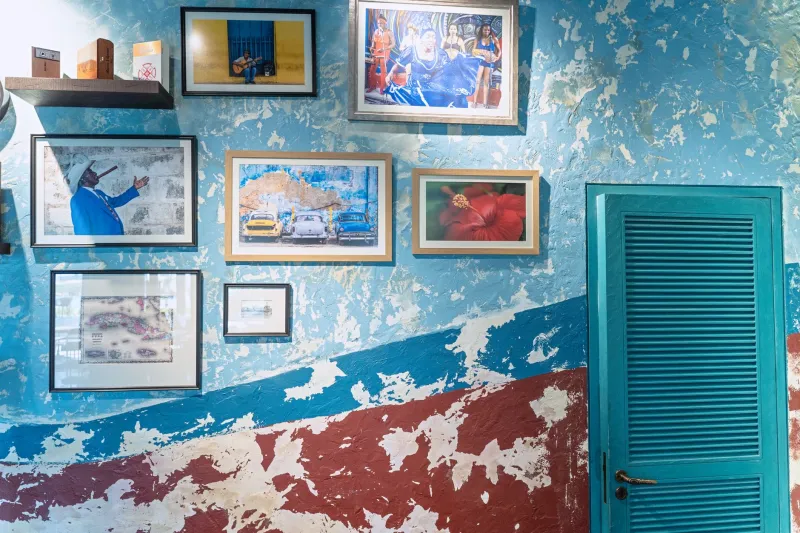
There is a particular kind of stillness that settles over a well-traveled home. It is not the stillness of emptiness, but of depth—the accumulated hush of many distant places brought to rest in a single, intimate space. For a growing number of affluent American travelers, this is the ultimate souvenir: not a snow globe or a branded tote bag, but a living gallery assembled over years of purposeful acquisition, where a hand-carved ceremonial mask from Oaxaca converses across the room with a celadon vessel from Chiang Mai, and a framed antique botanical print from a Parisian marché anchors an otherwise contemporary study.
This is conscious curation—the philosophy of collecting not for accumulation, but for meaning.
Beyond the Gift Shop: A Shift in Collecting Philosophy
The impulse to bring something home from travel is as ancient as travel itself. What has changed, among luxury travelers in particular, is the intention behind that impulse. Where previous generations might have filled a credenza with decorative plates or arranged refrigerator magnets in neat rows, today's discerning wanderers approach acquisition the way a museum director approaches a new exhibition: with research, restraint, and a governing narrative.
"I never buy anything I cannot explain in detail," says one New York-based collector who has spent two decades assembling a private gallery that spans five continents. "Every piece in my home has a provenance story. If I cannot tell you exactly where it came from, who made it, and why it matters to the culture that produced it, it does not come home with me."
This philosophy—rooted in curiosity rather than consumption—reflects a broader cultural shift among affluent travelers who have grown weary of the performative aspects of luxury. The focus has turned inward, toward experiences and objects that carry genuine resonance rather than mere prestige.
The Art of the Considered Acquisition
Intentional collecting begins long before a traveler boards a flight. The most practiced collectors research the artistic traditions of their destination with the same rigor they apply to selecting hotels or restaurants. They seek introductions to local gallery owners, auction house specialists, and cultural historians. They read. They ask questions that most tourists never think to pose.
In practice, this might mean spending an afternoon in the textile markets of Marrakech with a guide who specializes in Berber weaving traditions, or commissioning a piece directly from a master ceramicist in Kyoto rather than purchasing a ready-made work from a tourist-facing shop. It might mean attending a regional auction preview in Buenos Aires or sitting with an antiques dealer in Charleston, South Carolina—because meaningful collecting is not exclusively an international pursuit. American craft traditions, from Appalachian woodworking to Southwestern silversmithing, offer equally rich material for the discerning eye.
The guiding principle, collectors consistently note, is emotional and intellectual resonance over monetary value. The most prized acquisitions are rarely the most expensive ones.
Authentication, Provenance, and the Responsibility of Ownership
With the privilege of collecting comes a significant ethical obligation. The international art and antiques market is not without its complications, and responsible collectors are acutely aware of the legal and cultural dimensions of acquiring objects abroad.
Authentication is the foundational step. For serious acquisitions, this means engaging certified appraisers, consulting specialists with regional expertise, and—when purchasing antiques or ethnographic objects—verifying that items were not removed from their country of origin in violation of cultural property laws. The 1970 UNESCO Convention on the Means of Prohibiting and Preventing the Illicit Import, Export and Transfer of Ownership of Cultural Property remains the benchmark reference point, and reputable dealers will readily provide documentation demonstrating compliance.
Beyond legality lies the question of cultural stewardship. Many collectors choose to include interpretive labels or accompanying documentation with each piece in their home collection—a practice borrowed from institutional museums that adds educational context and honors the traditions from which each object originates. This transforms a private collection from a display of personal wealth into something closer to an act of cultural preservation.
"I think of myself as a temporary custodian," reflects one Los Angeles-based collector who focuses primarily on indigenous textile arts from the American Southwest and Central America. "These objects existed before me and will outlast me. My role is to care for them, understand them, and eventually ensure they pass to someone who will do the same."
Designing a Home That Tells a Story
The curatorial challenge extends naturally to the domestic space itself. A collection assembled with intention deserves a setting conceived with equal care. Interior designers who specialize in working with travel collectors speak of the importance of allowing objects to breathe—of resisting the temptation to fill every surface and instead allowing individual pieces the visual space they need to communicate.
Lighting, unsurprisingly, plays a transformative role. Museum-quality picture lights, adjustable track systems, and carefully positioned natural light can elevate even modest acquisitions into objects of genuine contemplation. Similarly, the relationships between objects—how a piece of Japanese lacquerware is grouped with a hand-thrown American studio pottery piece, for instance—can create unexpected dialogues that enrich the overall narrative of a collection.
The most accomplished travel collectors also avoid the temptation of thematic rigidity. A home gallery need not be organized by geography or chronology. What it must have is a unifying sensibility—a sense that every object, however disparate its origin, belongs in the company of the others. That sensibility is the collector's voice, and it is what elevates a curated home above mere decoration.
Where to Begin
For those newly drawn to intentional collecting, the counsel from experienced practitioners is remarkably consistent: start slowly, buy only what genuinely moves you, and invest in knowledge before you invest in objects.
Several American cities offer excellent entry points into the world of serious collecting. New York's Outsider Art Fair, held annually in January, introduces visitors to self-taught and vernacular art traditions from around the world. The Winter Antiques Show, also in New York, is widely regarded as one of the finest vetted antiques fairs in the country. For those with an interest in contemporary craft, the American Craft Council Show and events hosted by the Society of Arts and Crafts in Boston offer access to some of the most accomplished working artisans in the nation.
Abroad, auction previews in London, Paris, and Hong Kong remain invaluable for education as much as acquisition. Attending these events—even without purchasing—sharpens the eye and deepens one's understanding of quality, condition, and value.
A Collection as Self-Portrait
Ultimately, the home collection of a conscious traveler is something deeply personal: a self-portrait rendered not in paint or photograph, but in the accumulated evidence of a life spent in curious engagement with the world. Each object is a memory made tangible, a relationship with a place or a maker frozen in form.
In an era when travel experiences are increasingly ephemeral—documented on screens and dispersed across social platforms—there is something profoundly grounding about the physical object, about holding in one's hands something made by another person's hands in another part of the world. It is, in the truest sense, a way of keeping the journey alive.
The walls, in this light, do not merely display. They illuminate.