The Unhurried Metropolis: How Luxury Travelers Are Finding a City's Soul by Slowing Down
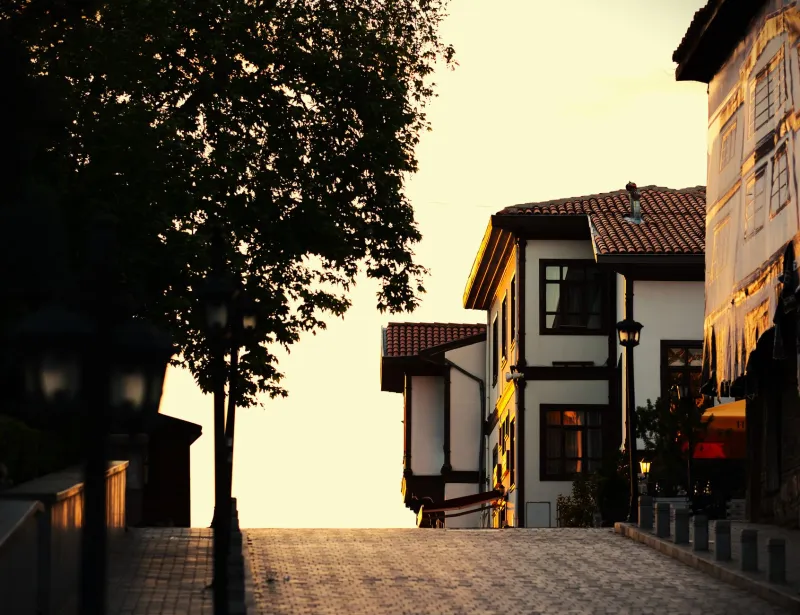
There is a particular kind of traveler who arrives in Tokyo, New York, or Paris and immediately sets about conquering it—museum at nine, landmark by noon, Michelin-starred dinner by eight. The itinerary is impeccable. The photographs are flawless. And yet, somewhere between the bullet-pointed attractions, the city itself slips quietly away, unwitnessed.
A quieter, more considered school of travel is emerging in its place. Affluent wanderers—those who have already collected the landmarks and tasted the celebrated restaurants—are beginning to ask a more nuanced question: What does a city feel like when you stop performing it? The answer, it turns out, is extraordinary.
The Philosophy of Deliberate Deceleration
Slow travel, as a concept, is hardly new. Its roots stretch back to the literary wanderers of the nineteenth century, who lingered in foreign cities for months at a time, absorbing language, light, and local rhythm in equal measure. What is new is its application to the modern luxury experience—and the recognition that restraint, in travel as in life, is often the most sophisticated choice one can make.
The philosophy rests on a simple but counterintuitive premise: the fewer places you attempt to see, the more you actually witness. A traveler who spends three full days within a single Parisian arrondissement will understand that neighborhood—its morning temperament, its afternoon light, the particular way its residents greet their bakers—in ways that a two-week whirlwind itinerary across the entire city simply cannot replicate. Depth, not breadth, becomes the luxury.
For American travelers accustomed to maximizing every vacation day, this requires a genuine recalibration of expectation. The impulse to justify the cost of an international flight by filling each hour with experience is understandable. But the most seasoned travelers will tell you that the memories that endure are rarely the iconic ones. They are the afternoon in a Kyoto kissaten where time seemed to pause, or the hour spent watching the light shift across a Barcelona courtyard that no tour bus stops to acknowledge.
The Boutique Hotel as Neighborhood Embassy
The accommodation one chooses becomes the foundation of this philosophy. A large, internationally branded hotel—however opulent its amenities—situates the traveler within a kind of gilded bubble, insulated from the city's authentic texture. The slow traveler, by contrast, seeks lodging that functions as a genuine embassy of its neighborhood.
Boutique properties embedded within residential quarters offer something that five-star towers rarely can: the sensation of belonging. Consider the intimate, design-forward hotels that have taken root in Brooklyn's Boerum Hill, Chicago's Wicker Park, or the Marais district of Paris. These establishments are not merely places to sleep; they are curated points of entry into a local ecosystem. Their concierges do not hand you a laminated sheet of tourist attractions. They tell you which corner café the architects favor on Tuesday mornings, and where the neighborhood's best natural wine shop keeps its most interesting bottles behind the counter.
This embedded approach transforms the hotel stay itself into an experience—one that compounds beautifully over several nights as the traveler becomes, however temporarily, a recognizable face in the surrounding streets.
The Single-Neighborhood Day: A Masterclass in Urban Intimacy
Perhaps the most revelatory practice within slow urban travel is the deliberate choice to spend an entire day—sunrise to late evening—within a single neighborhood. It sounds almost absurdly simple. It is, in practice, quietly transformative.
Imagine devoting a full day to New York City's Lower East Side, not as a tourist destination, but as a living district with its own rhythms and contradictions. Begin at a bakery that has served the same community for three generations. Move through the morning gallery openings on Orchard Street, where the art is serious and the conversations are unguarded. Spend an unhurried hour at the Essex Market, not purchasing, merely observing the commerce of daily life. Lunch at a restaurant so small it seats fourteen, where the menu changes not seasonally but weekly. By afternoon, the neighborhood has begun to reveal its quieter architecture—the painted doorways, the community garden tucked between tenements, the light at four o'clock falling across a particular stretch of Rivington Street in a way that no photograph adequately captures.
This is the luminous moment that slow travelers speak of with such reverence. It cannot be scheduled. It can only be created by the conditions of unhurried presence.
Micro-Adventures Within the Macro City
Slow urban travel does not preclude adventure—it simply redefines its scale. The micro-adventure, as practiced by the discerning traveler, might be as modest as following a single ingredient—say, yuzu—through a Tokyo neighborhood's markets, restaurants, and artisan shops over the course of a morning. Or tracing the architectural influence of a single era through the streets of Chicago's Loop, with no agenda beyond curiosity and comfortable shoes.
These self-directed explorations yield a particular kind of satisfaction that organized tours, however luxurious, cannot replicate: the satisfaction of genuine discovery. When a traveler stumbles upon a bookshop concert in a Lisbon backstreet, or finds a rooftop garden maintained by a Williamsburg restaurant, the experience carries the weight of something earned rather than arranged.
For those who prefer a degree of curation, a growing number of luxury travel designers now specialize in building slow itineraries—frameworks rather than schedules, which suggest possibilities without prescribing outcomes. This represents one of the more thoughtful evolutions in high-end travel planning.
Redefining the Memorable Journey
There is a certain cultural pressure, particularly acute among American travelers, to return from a major city with a comprehensive account of its greatest hits. To have seen the obvious, tasted the celebrated, and photographed the iconic. This pressure is worth examining honestly—because it often produces travel that is experienced primarily in retrospect, through the sharing of images, rather than in the present tense of actual living.
The slow traveler inverts this dynamic entirely. The journey becomes less about accumulation and more about absorption. Less about coverage and more about depth. The stories that emerge from this kind of travel are quieter, more particular, and far more difficult to replicate—which is, perhaps, the truest definition of luxury that the modern world of travel can offer.
A city, after all, is not a checklist. It is a living, breathing civilization with centuries of accumulated character. To move through it at speed is to skim the surface of something profound. To slow down—deliberately, luxuriously, without apology—is to begin to understand it.
And in that understanding, however partial and however brief, lies the kind of illumination that travel, at its finest, has always promised.