When Silence Speaks: The Rise of Solitude as the Ultimate Luxury Experience
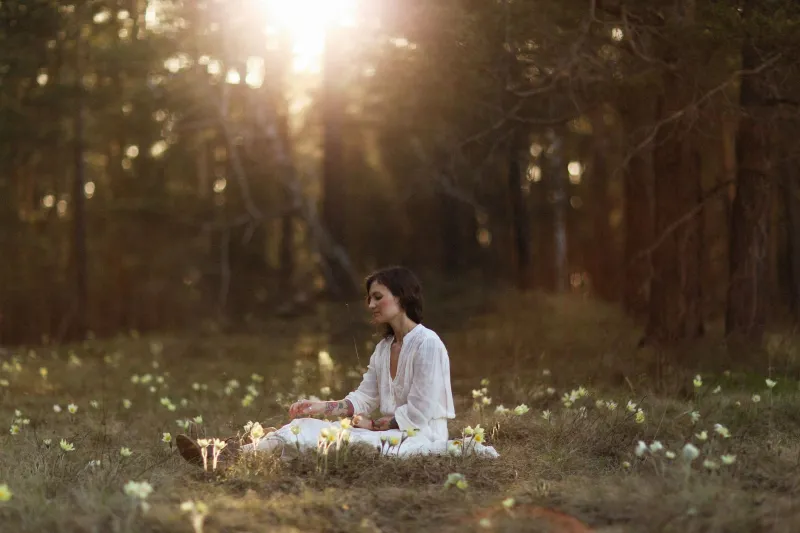
There is a particular kind of exhaustion that no spa treatment or first-class flight upgrade can remedy. It accumulates quietly — in the relentless chime of notifications, the ambient roar of open-plan offices, the social obligations that crowd even the most well-appointed vacation itinerary. For a discerning generation of American travelers who have, in many respects, acquired everything the conventional luxury market has to offer, the one experience that remains genuinely rare is silence. True, curated, purposeful silence.
This is not merely an absence of sound. It is something far more deliberate — a condition that the world's most thoughtfully designed retreats are now engineering with the same precision once reserved for wine cellars and bespoke butler programs. Solitude, it turns out, is having its moment as the defining luxury of the decade.
The Recalibration of Wealth and Wellness
The American luxury traveler has long been defined by an appetite for accumulation — more destinations, more experiences, more curated excursions per itinerary. Yet a significant cultural shift is underway. Behavioral researchers and high-end travel consultants alike are noting that their most affluent clients are now asking a different set of questions when planning a journey. Rather than where can I go?, the inquiry has become where can I simply be?
This recalibration reflects a broader philosophical evolution within the luxury wellness sector. The global wellness economy, valued at over five trillion dollars, is increasingly pivoting toward what practitioners call "depth experiences" — immersive encounters that prioritize psychological restoration over physical indulgence. For those who can afford any destination on earth, the truly scarce commodity is not a private island or a rare vintage; it is mental stillness.
Boutique retreat operators from the high desert of New Mexico to the fjords of Norway have taken careful note.
Sanctuaries Engineered for Inner Quiet
Among the most compelling examples of this emerging category is a new wave of wellness properties that have deliberately stripped away the programmatic busyness that once characterized even the finest spa resorts. These are not places where your days are filled with scheduled activities and group yoga sessions. They are, instead, environments of profound architectural and sensory intentionality.
Consider the design philosophy at play: guest quarters positioned to eliminate ambient sound from neighboring spaces; menus built around foods known to support neurological calm; lighting systems calibrated to the body's natural circadian rhythms; and, crucially, policies that gently but firmly discourage the presence of personal devices. Some of the most sought-after properties now offer what they term "digital custody" — guests voluntarily surrender their phones and laptops upon arrival, receiving them back only at departure.
For travelers accustomed to the constant stimulation of executive life, this initial surrender can feel genuinely disorienting. Yet those who have undergone the experience consistently describe a remarkable phenomenon: within forty-eight to seventy-two hours, the internal noise begins to quiet as well.
The Geography of Stillness
Certain landscapes have long possessed an inherent capacity for inducing contemplative states. The American Southwest, with its vast, ochre-tinted silence and skies unburdened by light pollution, has become a particular magnet for solitude seekers. Private nature reserves in southern Utah and the high-altitude terrain surrounding Taos, New Mexico offer not only visual grandeur but an acoustic environment so undisturbed that guests frequently report hearing their own heartbeats for the first time in years.
Internationally, the tradition of structured solitude has deeper institutional roots. Japanese forest bathing — shinrin-yoku — has informed the programming at several ultra-exclusive retreats that now offer guided immersion in ancient woodland, with naturalist-curated walks designed to slow perception rather than stimulate it. In Bhutan, where the government has long protected the nation's Gross National Happiness index with the same rigor applied to its environmental policies, a handful of extraordinary properties offer meditation programs conducted under the guidance of resident monks, in spaces where silence has been cultivated for centuries.
What unites these geographically disparate sanctuaries is a shared understanding: the environment must do much of the work. Solitude cannot be imposed; it must be invited by surroundings that make stillness feel not merely possible, but inevitable.
What Travelers Are Actually Finding
The testimonials emerging from this category of experience are striking in their consistency. A corporate attorney from Chicago who spent five days at a silent retreat in the Berkshires described her experience not as relaxation, but as revelation. "I had believed I was managing stress effectively," she reflected. "What I discovered in the silence was that I had simply become very skilled at not feeling it."
A technology entrepreneur from San Francisco who completed a ten-day digital detox program at a private reserve in Costa Rica spoke of returning to his company with a clarity of strategic thinking that had eluded him for years. "The silence didn't empty my mind," he noted. "It organized it."
These accounts point to something the wellness research community has been documenting with increasing rigor: periods of genuine solitude and silence are not merely restorative but cognitively generative. The Default Mode Network — the neural circuitry most active during quiet, undirected thought — is now understood to play a critical role in creativity, self-understanding, and long-term decision-making. The world's most thoughtful luxury retreat designers are, in effect, creating the conditions for this network to flourish.
Curating Your Own Journey Into Stillness
For those considering this category of travel for the first time, a few principles merit consideration. The most meaningful solitude experiences are rarely the most aggressively marketed ones. Seek properties with a genuine philosophical commitment to quietude — evidenced not by marketing language, but by architectural choices, staff-to-guest ratios, and the deliberate absence of programming for its own sake.
Duration matters considerably. A weekend retreat may offer a pleasant decompression, but the more transformative shifts in perception tend to emerge only after the fourth or fifth day, once the habitual rhythms of connected life have genuinely loosened their grip. Budget accordingly, both in time and investment.
Finally, approach the experience with the same intentionality that the retreat itself embodies. Arrive with a willingness to sit with discomfort, with unfamiliar quiet, with the particular quality of attention that emerges when there is nothing competing for it. The most illuminating journeys, as any seasoned wanderer eventually discovers, are not always the ones that take you furthest from home — but the ones that return you most fully to yourself.