Darkness as Destination: The Rise of Astrotourism and the West's Most Luminous Night Skies
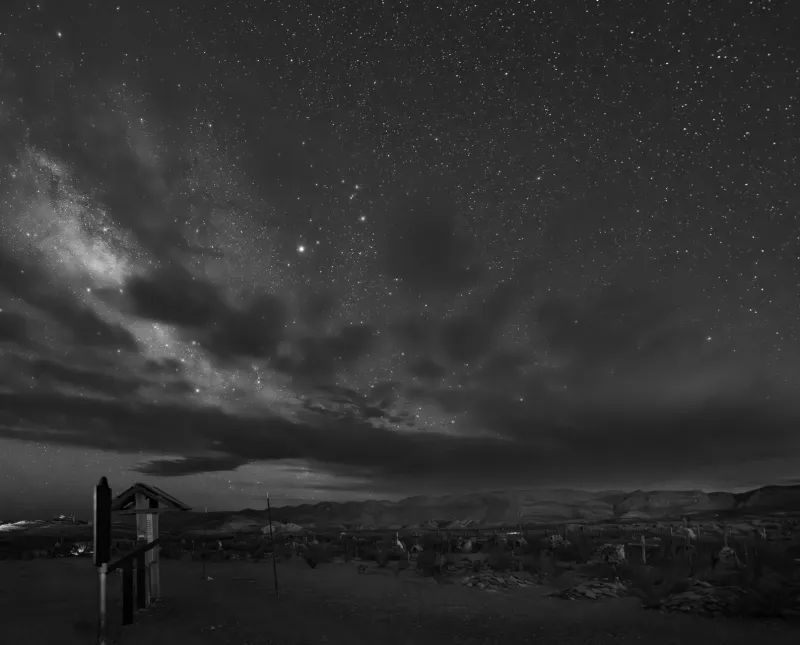
There is a particular kind of silence that descends over the Colorado Plateau after nightfall — one that is not merely the absence of sound, but the presence of something vast and unhurried. Stand far enough from the nearest city, and the sky above reveals itself as it has for millennia: an unbroken canopy of light, ancient and indifferent to the pace of modern life. It is precisely this quality — rarity, depth, and the sensation of genuine remove — that has made dark sky travel one of the most sought-after luxury experiences in the American West.
For years, the night sky was simply what lay beyond the reach of accommodation lighting. Today, it is the destination itself.
The Mechanics of Darkness
The International Dark-Sky Association (IDA) designates dark sky reserves, parks, and sanctuaries based on measurable reductions in artificial light pollution. The American West, by virtue of its geography — wide valleys, sparse population corridors, and high-altitude terrain — holds a remarkable concentration of these certified locations. Utah alone contains five national parks within what is known informally as the "Dark Sky Corridor," and the state has made a concerted effort to position itself as the preeminent destination for celestial tourism in the continental United States.
Bryce Canyon National Park, situated at elevations exceeding 8,000 feet, holds IDA certification and offers some of the clearest atmospheric conditions available to travelers without a passport. The hoodoo formations that define its landscape by day become something altogether more theatrical by night, their silhouettes framing a sky so dense with stars that the Milky Way appears not as a faint suggestion but as a structural element of the scene.
For the traveler who requires their darkness delivered with a measure of comfort, this is where the luxury market has stepped forward with considerable imagination.
The Architecture of the Astrotourism Lodge
A new class of property has emerged across the region — one that treats darkness not as a liability to be mitigated but as an amenity to be curated. These lodges operate under strict lighting protocols, employing amber-spectrum outdoor fixtures that preserve night vision while maintaining the aesthetic warmth that luxury guests expect. Interiors are designed with retractable roof panels, observatory domes, or floor-to-ceiling glazing oriented toward the most unobstructed quadrants of sky.
In southern Utah, a number of boutique retreats have partnered with professional astronomers to offer what the industry now terms "guided celestial experiences" — evenings structured around specific astronomical events, constellation narratives rooted in Indigenous cosmology, and hands-on sessions with research-grade telescopes. These are not the casual stargazing programs offered by national park rangers. They are curated intellectual encounters, planned weeks in advance around lunar cycles and planetary alignments.
Arizona's high desert, particularly the corridor surrounding Flagstaff — the world's first IDA-designated Dark Sky City — has attracted a constellation of private observatories and intimate lodging experiences that cater explicitly to the well-resourced traveler. Some properties offer resident astrophysicists on retainer for the duration of a guest's stay, available for private sessions that range from introductory sky tours to deeply technical discussions of deep-space imaging.
Bespoke Photography and the Celestial Portfolio
For the traveler whose aesthetic sensibility extends to the photographic, dark sky destinations have given rise to an entirely new category of guided experience: the astrophotography retreat. These multi-day programs pair guests with specialists in long-exposure and wide-field imaging, providing not only technical instruction but access to pre-scouted locations where foreground and sky composition have been studied across seasons.
The images that result — canyon arches beneath star trails, silhouetted saguaro cactus against the Milky Way's core — have become a new form of travel artifact. Unlike a souvenir or even a fine dining memory, a well-executed astrophotograph carries within it the coordinates of a specific night, a specific sky, a specific silence. For collectors of experience, few mementos carry comparable weight.
Several high-end travel operators now offer fully bespoke astrophotography itineraries that incorporate private transport, dedicated shooting schedules aligned with astronomical calendars, and post-production consultations with professional retouchers. The resulting portfolio, presented in archival print form upon a guest's return, functions as both a personal record and a work of art.
Planning Considerations for the Discerning Traveler
The logistics of a dark sky journey require a degree of intentionality that differs from conventional luxury travel planning. Moon phase is perhaps the single most consequential variable: a full moon, however beautiful, effectively eliminates the faintest stars and renders the Milky Way invisible. Most serious astrotourism operators build their programming calendars around new moon windows, and premium dates fill months in advance.
Seasonal timing carries equal importance. Summer months bring the galactic core into optimal viewing position across the American West, while autumn offers the added dimension of cooler temperatures and reduced atmospheric turbulence. Winter nights in Utah and Arizona can be extraordinarily clear, though guests should be prepared for temperatures that demand proper outerwear — a detail that the finest properties address with thoughtfully curated cold-weather amenity kits.
Altitude acclimatization is a practical consideration that sophisticated operators address proactively, building arrival-day rest periods into itineraries and offering appropriate hydration and dietary support during the first twenty-four hours at elevation.
The Deeper Appeal
What the dark sky travel movement ultimately offers is something that no urban luxury property can replicate: genuine perspective. The night sky, encountered without mediation or light pollution, has a way of reordering priorities with quiet authority. It is a reminder — delivered in the most elegant terms — that the world extends far beyond the boundaries of what we can ordinarily perceive.
For the traveler who has experienced the finest hotels, the most refined cuisine, and the most exclusive cultural access the world has to offer, the American West's dark sky reserves present something genuinely novel: a luxury defined not by what has been added, but by what has been preserved. In a world of relentless illumination, darkness, it turns out, is among the rarest commodities of all.