Art in Motion: How the World's Most Discerning Travelers Are Building Collections One Gallery District at a Time
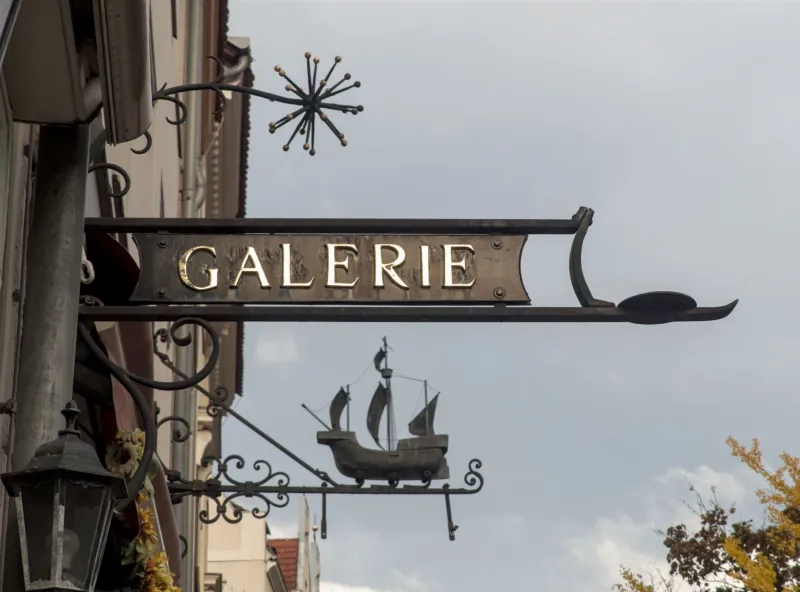
The most interesting thing about a painting acquired in a foreign city is not necessarily the painting itself. It is the accumulation of circumstances that led to its discovery: the unplanned detour down a side street, the gallery whose window display arrested a morning walk, the conversation with a gallerist that extended well past the point at which one had planned to leave. Art collecting, when it happens in the context of travel, is inseparable from the texture of the journey that produced it. This is precisely why it has captured the imagination of a generation of travelers who find conventional souvenirs — however finely crafted — insufficient to carry the weight of what a remarkable trip has meant.
The intersection of art and luxury travel is not new, of course. Wealthy Americans have been returning from European Grand Tours with paintings and sculpture for well over a century. What distinguishes the contemporary collecting traveler is intentionality: the deliberate structuring of a journey around gallery districts, art fairs, and studio visits, combined with an increasingly sophisticated understanding of the market dynamics that determine which acquisitions might appreciate alongside the memories they represent.
Wynwood and the Miami Model
Miami's Wynwood neighborhood has become something of a foundational text for the art-focused traveler — a district that transformed, over roughly two decades, from a light-industrial corridor into one of the most visited gallery concentrations in the Western Hemisphere. The annual Art Basel Miami Beach fair, held each December, draws a global roster of collectors, curators, and institutional representatives, but the district's galleries operate year-round with programming that rewards visitors who arrive outside the fair's frenetic peak.
For the traveler who approaches Wynwood with collecting intent rather than mere cultural tourism, the strategic advantage of an off-peak visit is considerable. Gallerists have time to converse at length, prices are not inflated by fair-week competition, and the possibility of genuine discovery — of encountering work that has not yet been amplified by critical attention — is meaningfully higher. Several boutique hotels in the Wynwood and Design District corridor have developed formal partnerships with local galleries, offering guests private previews, studio access, and curatorial introductions as part of their concierge programming.
The Miami model is instructive because it demonstrates how a gallery district can function as a complete ecosystem for the collecting traveler: accommodation, dining, cultural programming, and acquisition opportunity exist in sufficiently close proximity to allow a multi-day itinerary that is coherent rather than fragmented.
The European Gallery Circuit
For the American traveler who has exhausted Miami's offerings or who seeks the deeper historical context that European art markets provide, a curated circuit through the continent's most vital contemporary districts offers extraordinary breadth. Berlin's Kreuzberg and Mitte neighborhoods contain a density of emerging and mid-career galleries that is unmatched in Europe for the combination of quality and relative accessibility of price. The city's particular history — its decades of division, its reunification, its identity as a site of radical cultural production — infuses the work being made and shown there with a specificity that collectors find compelling.
Galleries such as Eigen + Art and Blain|Southern (now operating under revised structures post-pandemic) have long served as entry points for American collectors seeking European representation, and the gallerists who staff Berlin's more intimate spaces are, as a rule, unusually willing to engage with serious buyers who arrive outside the major fair circuit. The Berlin Gallery Weekend, held each spring, provides a structured occasion for gallery visits, though the discerning traveler will find that the weeks surrounding the event offer their own advantages — quieter spaces, more focused attention, and the occasional opportunity to meet artists whose studios are nearby.
In London, the neighborhoods of Mayfair and Fitzrovia retain their status as anchors of the blue-chip market, while the East End — Shoreditch, Bethnal Green, and the area surrounding the Whitechapel Gallery — continues to generate the kind of emerging talent that forms the foundation of a collection built for the long term rather than immediate prestige.
Art-Forward Hotels and the Curated Stay
The luxury hotel industry has recognized the collecting traveler as a distinct and valuable guest profile, and a number of properties have responded with programming that goes considerably beyond the decorative placement of art in corridors and lobbies. The 21c Museum Hotels group, with properties in Louisville, Cincinnati, Nashville, and other American cities, operates as a hybrid institution — functioning simultaneously as hotel, contemporary art museum, and cultural venue. Guests sleep amid rotating exhibitions of commissioned work and have access to curatorial staff who can contextualize what they are encountering.
In the international sphere, properties affiliated with the Leading Hotels of the World and Relais & Châteaux designations increasingly feature permanent collections of genuine significance, often with private viewing arrangements available to guests upon request. Some European properties have formalized relationships with regional auction houses, offering guests the opportunity to attend preview viewings and, in select cases, to participate in sales during their stay.
These accommodations function not merely as places to rest between gallery visits but as active participants in the collecting experience — curating the guest's exposure to art in a manner that mirrors the editorial sensibility of the finest private collections.
Practical Intelligence for the Collecting Traveler
Building a collection through travel requires a set of practical competencies that differ from those demanded by conventional art market participation. Chief among these is an understanding of the logistical infrastructure surrounding international art acquisition: customs regulations, import duties, condition reporting standards, and the role of art shippers in ensuring that a work arrives home in the condition in which it was purchased.
For works acquired within the United States — at a Miami gallery during Art Basel week, for instance — the logistical complexity is considerably reduced, though the importance of provenance documentation, condition reports, and certificate of authenticity remains constant regardless of geography. Reputable galleries provide these materials as a matter of course; any reluctance to do so should be treated as a meaningful signal.
Beyond logistics, the collecting traveler benefits from maintaining an ongoing relationship with a trusted art advisor — a professional whose knowledge of the market can help contextualize discoveries made in the field and whose network can facilitate introductions that would otherwise be unavailable. The finest advisors function not as gatekeepers but as collaborators, amplifying the traveler's own aesthetic instincts with market intelligence and historical perspective.
The Collection as Autobiography
What distinguishes a collection built through travel from one assembled through auction catalogues and fair visits alone is the narrative coherence that geography and experience provide. Each work carries within it the memory of its acquisition — the city, the season, the conversation that preceded the decision. Over time, a collection assembled in this manner becomes something more than an investment portfolio or a decorative program; it becomes a form of autobiography, legible to its owner in ways that no catalogue raisonné could fully capture.
This is, ultimately, the most compelling argument for art collecting as a travel practice. In a world where experiences are increasingly designed to be consumed and forgotten, the carefully chosen object that travels home with you insists on being remembered. It hangs on a wall, it demands to be looked at, and it carries, in its pigment and its provenance, the irreplaceable specificity of a particular moment in a particular place. For the traveler who seeks to illuminate their world in the fullest sense, few pursuits offer a more lasting light.