The Art of One: Why Affluent Travelers Are Discovering Their Truest Selves in Solitary Splendor
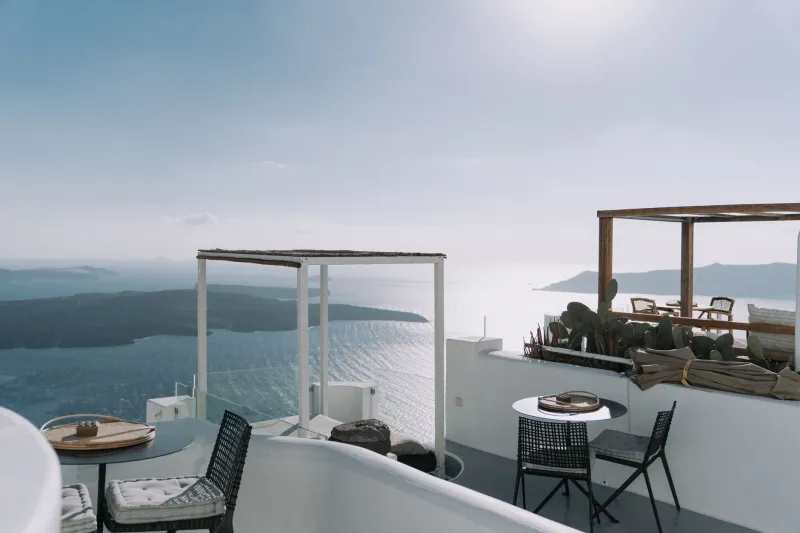
There is a particular kind of freedom that no first-class upgrade, no private villa, and no Michelin-starred tasting menu can purchase on its own. It arrives quietly, usually somewhere between the second morning coffee taken alone on a sun-warmed terrace and the unhurried afternoon spent wandering a foreign city without negotiation or compromise. It is the freedom of traveling entirely on one's own terms—and among the world's most accomplished wanderers, it has become the most coveted luxury of all.
Solo travel among affluent Americans is no longer the province of the recently divorced or the restlessly adventurous. It has matured into a considered, deliberate philosophy—one that draws its power not from circumstance but from choice. When someone who could book any companion, charter any vessel, and reserve any suite elects instead to travel alone, that decision carries enormous weight. It is, at its core, an act of radical self-knowledge.
The Psychology of Purposeful Solitude
Psychologists have long understood that the conditions in which we encounter ourselves most honestly are conditions of solitude. Remove the social performance that accompanies even the most comfortable group travel—the shared opinions about the food, the negotiated pace of exploration, the quiet deference to another's preferences—and what remains is a traveler confronting the world, and themselves, without mediation.
For high-net-worth individuals accustomed to managing teams, households, and complex professional landscapes, this unmediated experience can be genuinely revelatory. The solo luxury journey offers something their daily lives rarely do: an absence of audience. There is no one to impress, no narrative to maintain, and no schedule to harmonize. The result, as many returning solo travelers describe it, is not loneliness but lucidity.
This distinction matters enormously. Loneliness is an involuntary condition. Solitude, by contrast, is a cultivated one—and when surrounded by exceptional comfort, attentive service, and environments of extraordinary beauty, it becomes something closer to a practice than a circumstance.
How the Luxury Industry Has Answered the Call
The travel industry has taken notice. Properties and experience designers that once oriented their offerings almost exclusively around couples and groups have quietly, and in some cases dramatically, reconfigured their programming to serve the solitary affluent traveler with equal sophistication.
Single-occupancy pricing, long a source of frustration for solo travelers, has been reconsidered at the upper end of the market. A growing number of ultra-luxury lodges in destinations from Patagonia to the Maldives now offer single-traveler rates that eliminate the punitive supplement traditionally charged for occupying a room alone. More meaningfully, these properties have begun designing experiences that are genuinely enhanced by solitude rather than merely tolerant of it.
Private guided excursions, once a practical necessity for group logistics, have been reimagined as deeply personal intellectual engagements. A solo traveler booking a private art history walk through Florence, or a one-on-one session with a master perfumer in Grasse, receives something a group tour fundamentally cannot replicate: the guide's complete and undivided attention, and the freedom to follow curiosity wherever it leads without apology.
Meanwhile, a new category of curated solo itineraries has emerged from the most respected luxury travel agencies in the United States. These are not simply existing group programs stripped of their companions. They are architecturally distinct journeys, built around the rhythms, preferences, and psychological needs of a single traveler moving through the world with intention.
Reframing the Narrative Around Dining and Evenings Alone
Perhaps no aspect of solo luxury travel has historically carried more social stigma than the solitary dinner. In American cultural imagination, eating alone in a fine restaurant has long been associated with misfortune rather than preference. The affluent solo traveler, increasingly, is dismantling this association entirely.
The finest restaurants in the world have always maintained a quiet respect for the solo diner who arrives with presence and purpose. A single guest at the bar of a celebrated Parisian brasserie, or occupying a corner table at a renowned Tokyo kaiseki counter, is not an anomaly to be pitied—they are, in the eyes of many seasoned restaurateurs, the ideal guest. Unhurried, fully present, and unencumbered by the social dynamics of a table, the solo diner often engages most deeply with the craft being presented.
Many luxury travelers have discovered that evenings alone, particularly when supported by a hotel concierge of genuine skill, become among the most memorable of any journey. The right table, the right sommelier's guidance, the right book tucked into a jacket pocket—these elements compose an evening of quiet richness that group travel rarely permits.
The Guilt That No Longer Belongs
For many American travelers, particularly those with families or long-term partners, the decision to travel alone carries a residual guilt that has little to do with the journey itself. Cultural conditioning around productivity, togetherness, and the perceived selfishness of solitary pleasure can shadow even the most well-earned solo retreat.
What the most sophisticated travelers have come to understand is that this guilt is not only unnecessary but counterproductive. The clarity, perspective, and renewal that a well-executed solo journey provides are not indulgences extracted from one's relationships and responsibilities—they are investments in the quality of presence one brings back to them.
To travel alone, at the highest level of comfort and intention, is not to abandon one's life. It is to illuminate it.
The Return
Travelers who have embraced solo luxury exploration describe the return home in terms that are almost universally consistent: a heightened awareness of what matters, a quieted restlessness, and a more deliberate engagement with the world they inhabit every day. These are not trivial outcomes. They are, arguably, among the most valuable things travel can offer.
The world's finest destinations have always rewarded those who arrive with full attention. Traveling alone, it turns out, may be the most reliable way to ensure that attention is genuinely one's own.