The Faithful Return: Why the World's Most Sophisticated Travelers Keep Going Back
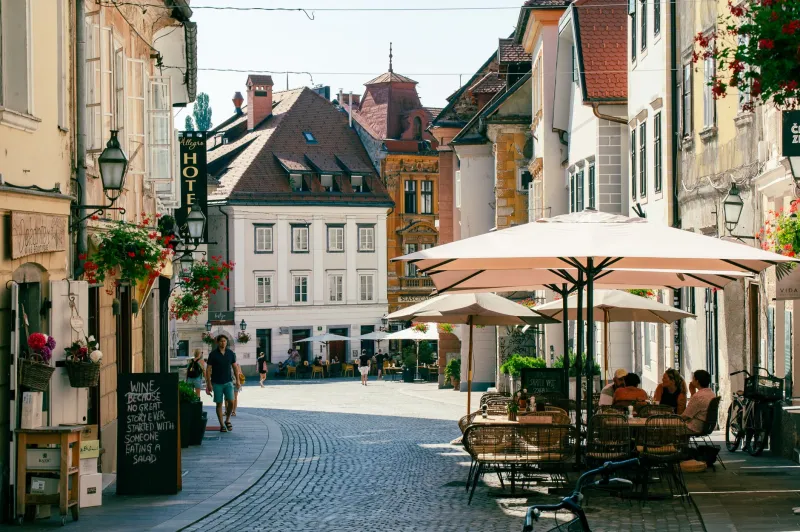
Somewhere along the way, American travel culture became synonymous with accumulation. Countries counted, continents ticked, landmarks photographed and filed. The implicit logic was that breadth equaled richness — that the traveler who had been to the most places had, by extension, lived the most fully.
A quieter, more considered philosophy is now emerging among those who have traveled extensively enough to recognize the limits of that model. They are choosing, with increasing intentionality, to go back.
The Diminishing Returns of Novelty
The first visit to any destination is necessarily superficial. This is not a criticism — it is simply the nature of encounter. The unfamiliar demands so much cognitive attention that genuine understanding is nearly impossible to achieve. One is busy orienting, adjusting, translating, navigating. The experience is vivid, often thrilling, but it is ultimately an introduction rather than a relationship.
The second visit is different. The disorientation is gone, replaced by something more useful: the capacity to notice. Familiar streets become legible. The rhythms of a neighborhood reveal themselves. A traveler who has been somewhere before can afford to stop moving and simply observe.
By the third visit, something more significant begins to happen. The place is no longer performing for the traveler. It is simply existing, and the traveler is present within it — not as a visitor navigating an itinerary, but as a recurring figure in a landscape that has begun, in some small way, to recognize them.
Seasonal Mastery and the Layered Destination
One of the most compelling arguments for strategic repetition is the revelation that most destinations are, in fact, multiple places layered within a single geography — each season offering an entirely distinct experience.
Consider Tuscany in late October, when the harvest is underway and the roads between hill towns carry the smell of fermenting must, versus Tuscany in February, when the olive groves are bare and the piazzas belong entirely to locals. These are not variations on the same experience. They are different experiences sharing a name.
The same principle applies across the world's great destinations. Kyoto in cherry blossom season draws millions; Kyoto in November, when the maple leaves turn and the crowds are a fraction of spring's, is an entirely different proposition. The American Southwest in June is punishing; in March, after a wet winter, the desert floor erupts in wildflower abundance that lasts perhaps ten days and is witnessed by almost no one.
The traveler who returns understands this. They plan not to see a place but to see a version of it — one they have not yet encountered — and they arrive with the anticipation not of discovery but of reunion.
The Slow Accumulation of Local Relationship
Perhaps the most undervalued dimension of strategic repetition is what it produces socially. The traveler who returns to the same small hotel in Provence for five consecutive autumns is not merely a loyal guest — they are, eventually, something closer to a known quantity. The proprietor asks about their children by name. The local wine merchant sets aside bottles from a particular domaine because they remember the conversation from two years prior. The woman who runs the Tuesday market recognizes them and saves the best of the season's walnuts.
These relationships cannot be purchased or arranged in advance. They are earned through time and the consistency of return. And they transform the nature of the destination entirely. The traveler is no longer moving through a place. They are, in some modest but genuine sense, part of it.
For American travelers accustomed to the transactional nature of most luxury service, this kind of organic local relationship represents something genuinely novel — and, many report, genuinely moving.
Returning as a Form of Self-Portrait
There is another dimension to strategic repetition that is less discussed but perhaps most significant: what it reveals about the traveler themselves.
A destination experienced across a decade of visits becomes a kind of mirror. The traveler who first arrived in their thirties, preoccupied with professional ambition and moving quickly through each day, returns in their forties to find themselves drawn to entirely different things — the morning light in a particular square, the pace of a neighborhood they once dismissed as unremarkable, a conversation with an elderly resident they would previously have been too distracted to pursue.
The place has not changed. The traveler has. And the destination, revisited, makes that change visible in a way that novelty never can. There is a specific kind of self-knowledge available only through return — the understanding of who one was, and who one has become, measured against a fixed and familiar landscape.
A Different Kind of Status
In the social grammar of affluent American travel, the currency of the new destination has long been dominant. There is status in the remote, the first-visited, the recently opened. The traveler who has been somewhere no one else has been occupies a particular position in the conversation.
But among the most quietly confident travelers — those whose relationship with the world is measured in depth rather than distance — a different kind of status is emerging. It is the status of the person who, when a destination is mentioned, says simply: I have been going there for fifteen years. I know a place.
That knowledge — accumulated, seasonal, relational, personal — is not something that can be compressed into a single extraordinary trip. It is built slowly, visit by visit, like the rings of a tree. And for those who have chosen to build it, no first visit to anywhere holds quite the same appeal as the return.