The Quiet Luxury of Going Unnoticed: Why the World's Most Sophisticated Travelers Are Choosing Anonymity as Their Greatest Indulgence
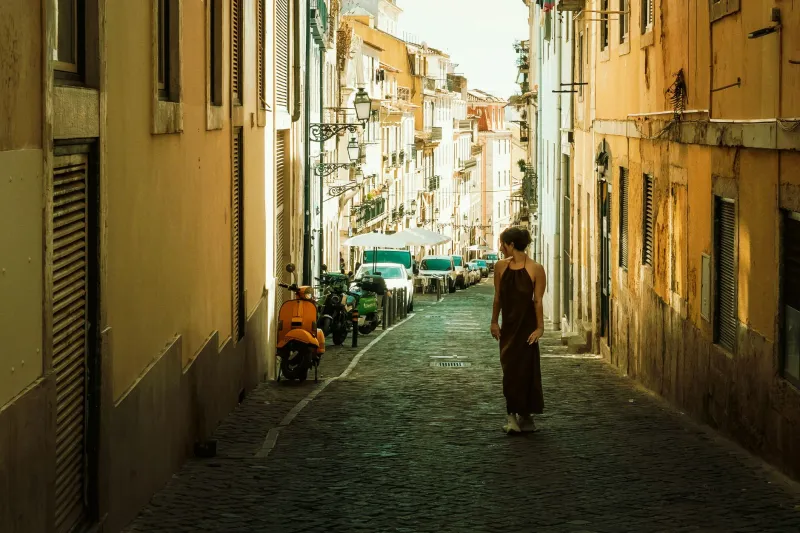
There is a particular kind of freedom that arrives only when no one is watching. In the cobblestone lanes of Porto, at a counter stool in a Tokyo kissaten, or along the unhurried backstreets of Oaxaca's historic center, a growing cohort of affluent American travelers has discovered something that no five-star marquee can provide: the profound pleasure of belonging, however temporarily, to the place they have chosen to visit.
This is invisible travel—a philosophy that prizes cultural transparency over conspicuous consumption, and quiet observation over performative luxury. It is, in many respects, the most radical repositioning of high-end travel in a generation.
The Paradox at the Heart of Modern Luxury
For decades, luxury travel operated on a straightforward equation: the more visible your comfort, the more complete your experience. Gleaming hotel lobbies, name-embroidered luggage tags, and tables by the window at celebrated restaurants were the currencies of distinction. Status was confirmed by being seen in the right places, in the right company, at the right moment.
That calculus has quietly inverted itself.
Today's most thoughtful travelers—those who have already accumulated the expected experiences and checked the canonical boxes—are arriving at a more nuanced understanding of what travel can offer. They are not abandoning comfort; they are decoupling comfort from visibility. The goal is no longer to be recognized as someone who has arrived. It is to arrive so seamlessly that the destination itself opens in ways it never would for an obvious outsider.
The result is a paradox as elegant as it is counterintuitive: the wealthiest travelers are choosing to look like everyone else, and in doing so, they are accessing experiences that money alone cannot purchase.
What Invisible Travel Actually Looks Like
The mechanics of this approach are both practical and philosophical. Invisibility, in this context, does not mean discomfort or deprivation. It means the deliberate curation of an unobtrusive presence.
Accommodation without announcement. Rather than booking the penthouse suite at a globally recognized brand, invisible travelers gravitate toward intimate, independently owned properties—a converted merchant's house in Marrakech's medina, a discreet guesthouse in Kyoto's Higashiyama district, or a carefully restored brownstone rental in a residential Brooklyn neighborhood that a visiting New Yorker might never think to explore. These spaces offer impeccable service and considered design without the performative grandeur that signals tourist status from the moment one steps through the door.
Dining without a reservation you had to beg for. The unmarked restaurant, the lunch counter frequented by neighborhood regulars, the family-run trattoria with a handwritten menu—these are not consolation prizes. They are, for the invisible traveler, the primary objective. Michelin stars are not disqualifying, but they are no longer the sole measure of a meaningful meal. The question has shifted from who else has eaten here? to what does this place reveal about how these people actually live?
Dressing for the street, not the lobby. Perhaps nowhere is the shift more visually apparent than in how these travelers dress. Neutral palettes, locally purchased garments, and the studied absence of obvious luxury branding replace the resort wear and statement accessories that once telegraphed affluence. This is not self-denial; it is a form of sophisticated costume, worn in service of a deeper engagement with one's surroundings.
The Social Intelligence Behind the Strategy
Anonymity, when practiced with intention, functions as a form of social intelligence. A traveler who enters a space without the armor of obvious wealth or status invites a different quality of interaction. Market vendors negotiate differently. Café owners linger at the table. Locals offer directions, recommendations, and occasionally entire afternoons of unexpected conversation.
This is not naïveté about the realities of global tourism. It is a recognition that the performance of wealth creates distance—and that distance is precisely what the most experienced travelers are working to eliminate.
Cultural anthropologists have long observed that the most authentic access to any community is granted not to those who arrive with the most resources, but to those who demonstrate the most genuine curiosity. Invisible travelers are, in a sense, putting that principle into practice as a deliberate lifestyle choice.
Practical Strategies for Traveling Without a Footprint
For those inclined to experiment with this approach, the transition requires both preparation and a willingness to relinquish certain familiar comforts of recognition.
Research neighborhoods, not hotels. Before selecting accommodation, study the residential character of a city's less-touristed districts. Prioritize properties that are embedded in those communities rather than clustered in the visitor infrastructure zone.
Learn before you arrive. Even a functional command of basic phrases in the local language—ordering a coffee, asking for directions, expressing gratitude—signals respect and disrupts the assumption of tourist status. Apps such as Pimsleur or italki allow for meaningful preparation in the weeks before departure.
Travel with a local contact. Whether cultivated through a professional concierge network, a trusted travel advisor, or platforms that connect visitors with knowledgeable residents, having a local point of contact transforms the quality of experience available. They know which market opens at dawn, which neighborhood bar pours without pretense, and which streets reward an unhurried afternoon.
Slow the itinerary. Invisibility requires time. A traveler moving through three cities in five days will always be a tourist. One who spends ten days in a single neighborhood begins, however modestly, to become something else—a temporary resident, a familiar face, someone whose presence is no longer remarkable.
Edit the wardrobe ruthlessly. Pack with an eye toward the destination's everyday aesthetic rather than the hotel's dress code. Quality fabrics in understated tones travel well, require little maintenance, and draw no attention—which is, increasingly, the point.
The New Measure of a Journey Well Taken
What emerges from this philosophy is a recalibration of what it means to travel well. The bragging rights of invisible travel are, by definition, nearly impossible to display—and that is precisely their appeal. The story of a spontaneous afternoon spent with a retired schoolteacher in Lisbon, discovered only because one sat down at the right café at the right moment and looked approachable enough to invite conversation, cannot be captured in a photograph or confirmed by a reservation number.
It exists only in memory, which is perhaps the most exclusive address of all.
For the American traveler who has spent years accumulating experiences, destinations, and upgrades, this shift can feel disorienting at first—and then, with practice, profoundly liberating. The world, it turns out, is considerably more generous with itself when one stops announcing one's arrival and simply walks through the door.
The art of invisible travel is not about diminishing the self. It is about expanding the aperture through which the world becomes visible. And for those who have mastered it, there is no going back to the gilded lobby, the conspicuous table, or the recognizable luggage tag—not because those things lack value, but because what lies beyond them has proven so much more luminous.