Beyond Seasons: A Discerning Traveler's Guide to the World's Most Ephemeral Moments
The word season is, in the context of modern travel, almost embarrassingly broad. To say one visits Japan in spring, or Scandinavia in summer, is to speak in the rough vocabulary of the uninitiated—a language that collapses weeks of extraordinary specificity into a single, blunt category. The most discerning travelers have quietly abandoned this shorthand in favor of something far more precise: the microseason.
A microseason is not a marketing construct. It is a cultural and ecological reality—a window of days, sometimes merely hours, when a particular place achieves a condition of beauty or authenticity that cannot be experienced at any other point in the calendar year. To arrive at the right moment is an act of genuine connoisseurship. To miss it by a week is to have visited an entirely different place.
What follows is a curated guide to the world's most compelling microseason experiences, organized for the American traveler prepared to plan with precision and move with purpose.
Japan: The Granddaddy of Microseason Culture
No civilization has codified the microseason with greater sophistication than Japan. The traditional Japanese calendar divides the year into seventy-two ko—micro-periods of approximately five days each, each assigned a poetic name describing a specific natural phenomenon. Tōchū no hi (the fireflies glow at night) is a different season from Hotaru tobikau (the fireflies begin to fly). The distinction is not merely semantic; it reflects a cultural philosophy that prizes precise attention over general appreciation.
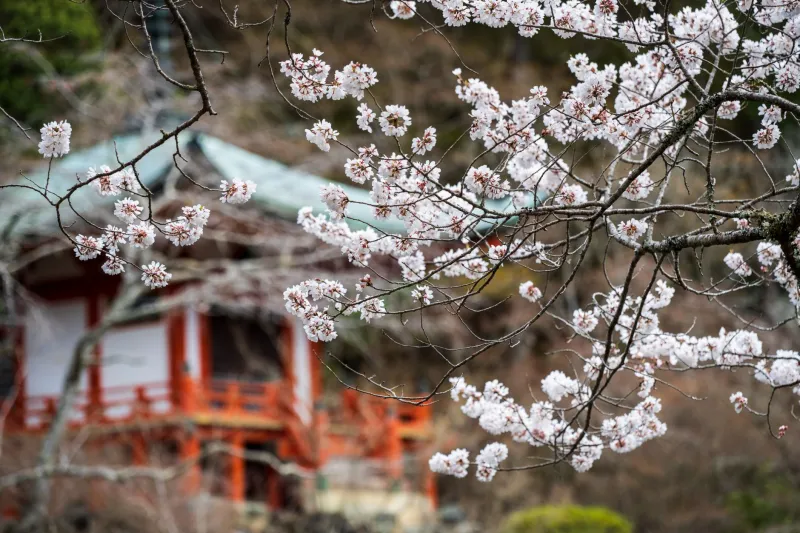
For Western travelers, the most famous Japanese microseason is cherry blossom, or sakura—but even this is widely misunderstood. The national bloom forecast issued each year by the Japan Meteorological Corporation tracks peak bloom (mankai) by region, and the window in any given location typically spans fewer than ten days. In Kyoto, the weeping cherry trees of Maruyama Park may peak as much as two weeks before the mountain varieties in Yoshino, Nara Prefecture—a pilgrimage site where more than thirty thousand trees bloom in staggered waves across an entire hillside.
The discerning move: Target ichibu-zaki—the moment when blossoms are approximately twenty percent open—rather than full bloom. The crowds thin considerably, the light filtering through partially open petals is arguably more beautiful, and the sense of anticipation in the air is a pleasure in itself.
Beyond sakura, Japan's autumn koyo (foliage) season operates with equal specificity. The crimson maples of Nikko peak in late October; those of Kyoto's Tofuku-ji temple typically follow in mid-November. Traveling between these two moments, rather than choosing one, allows the dedicated microseason traveler to follow the color southward like a conductor pacing a symphony.
Scandinavia: The Midnight Sun's Narrow Window
The midnight sun is frequently described as a Scandinavian summer phenomenon, which is accurate but insufficient. In Tromsø, Norway—a city positioned well above the Arctic Circle—the sun does not set at all between approximately May 20 and July 22. That is sixty-three days. But within that window, there exists a more specific phenomenon that relatively few travelers seek deliberately: the polar day at its most luminous peak, around the summer solstice, when the sun traces its lowest arc and bathes the landscape in a prolonged golden hour that can last for five or six hours continuously.
This is not merely pleasant. It is, for those who have experienced it, among the most disorienting and magnificent atmospheric conditions on earth. The light at 2:00 a.m. on the summer solstice in northern Norway resembles nothing so much as a perpetual late-afternoon in Tuscany—warm, lateral, and extraordinarily flattering to both landscape and human face alike.
The discerning move: Book accommodations with west-facing water views in the Lofoten Islands for the solstice week specifically. The combination of midnight sun over the Norwegian Sea and the archipelago's dramatic peaks creates photographic and experiential conditions unavailable anywhere else on earth at any other time.
Further south, Sweden's midsommar celebrations—concentrated in the region of Dalarna—represent a cultural microseason of equal intensity. The festivities last a single weekend, and the village celebrations in communities such as Leksand and Rättvik have remained essentially unchanged for centuries. This is not a festival manufactured for tourism; it is a genuine cultural expression that tolerates visitors but does not perform for them.
Morocco: The Almond Blossom Moment
Far fewer American travelers are aware that Morocco experiences its own brief and spectacular floral season, one that predates spring by a considerable margin. In the Ourika Valley south of Marrakech, and more dramatically in the Tafraoute region of the Anti-Atlas Mountains, almond trees erupt in white and pale pink bloom as early as late January and into February—a phenomenon that transforms an otherwise austere winter landscape into something approaching the miraculous.
The Tafraoute Almond Blossom Festival, typically held over a single weekend in February, draws Moroccan families from across the country but remains largely undiscovered by international luxury travelers. The surrounding granite landscape—boulders painted in vivid colors by Belgian artist Jean Vérame in the 1980s, now weathered to a pleasing softness—provides an extraordinary backdrop to the bloom.
The discerning move: Pair the almond blossom window with a stay at one of the intimate riads operating in the Ourika Valley, where the bloom arrives slightly later and the valley's terraced landscape channels the experience into something more intimate than the open plains of Tafraoute.
Patagonia: The Window Within the Window
Patagonia is widely understood to be a destination best visited in its Southern Hemisphere summer, roughly November through March. But within that broad window exists a microseason of particular intensity: the two to three weeks in late November when Patagonia's southern beech forests (lenga) display their spring emergence—a vivid, almost electric green that photographers and naturalists specifically time their visits to capture.
This window closes rapidly as summer advances and the leaves deepen to a darker, less luminous shade. By January, the same forests are beautiful but ordinary. In late November, they are extraordinary.
The discerning move: Combine the lenga emergence with a stay at one of the region's more architecturally considered lodges—properties that position their common spaces and guest rooms to frame the forest rather than merely adjoin it.
The Art of Microseason Planning
For the American traveler accustomed to booking six to twelve months in advance, the microseason approach requires a recalibration of planning philosophy. Bloom dates, atmospheric conditions, and festival schedules shift from year to year based on temperature patterns, rainfall, and ecological variables. The most effective approach involves establishing relationships with destination specialists who monitor these windows in real time and can advise on optimal arrival dates as the season approaches.
This is, ultimately, the deeper luxury embedded in microseason travel: it demands engagement. It cannot be left entirely to an itinerary drawn up a year in advance. It asks the traveler to remain attentive, to adjust, and to trust that the most extraordinary experiences are, by their nature, the ones that cannot be perfectly predicted—only perfectly met.