Written in the Stars: How the Language of Planetary Scale Deepens the Luxury Traveler's Cosmic Perspective
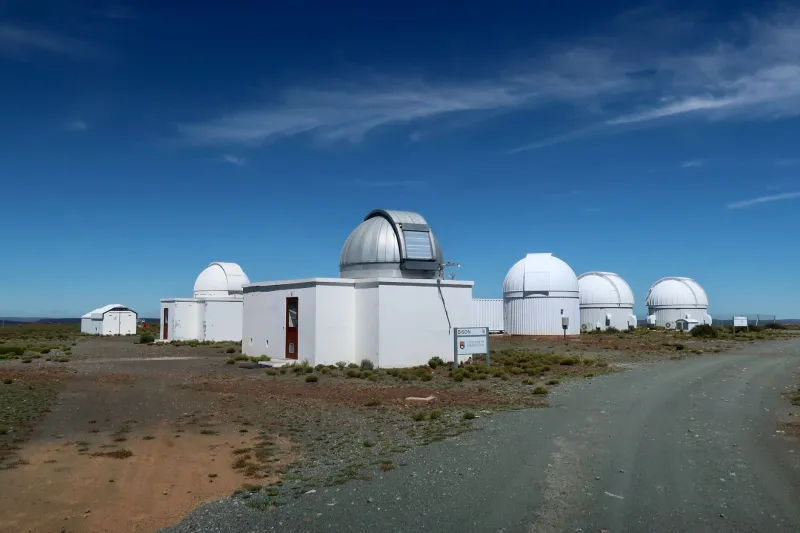
There is a particular kind of stillness that descends upon a traveler who stands in the high desert of New Mexico, or upon the volcanic plains of Iceland, and gazes upward into an unpolluted sky. In that moment, the grandeur of the cosmos is not merely felt — it is, for those who know the language, understood. The vocabulary we use to describe the sizes of planets is one of the most elegant lexicons in all of human inquiry, and for the luxury traveler who seeks depth alongside beauty, learning it is an investment that pays dividends across every journey.
The Fundamental Units: What Scientists Actually Use
When astronomers and planetary scientists describe the size of a planet, they rely on a handful of carefully defined measurements. The most fundamental of these is the radius, expressed either in kilometers or — more revealingly — in comparison to Earth itself. Earth's radius is approximately 6,371 kilometers, and this figure becomes the baseline against which all other worlds are measured.
For planets within our solar system, scientists speak in terms of Earth radii or Jupiter radii, depending on whether they are discussing a rocky terrestrial world or a gas giant. Jupiter, the solar system's largest planet, has a radius roughly 11 times that of Earth. Saturn, with its legendary rings, follows at approximately 9.1 Earth radii. These comparisons are not merely academic — they are the grammar of a conversation humanity has been having with the cosmos since Copernicus first dared to rearrange the heavens.
Beyond radius, planetary scientists also describe size through diameter, circumference, surface area, and volume. Each metric illuminates a different dimension of a planet's character. Volume, for instance, reveals that Jupiter could contain more than 1,300 Earths — a figure that, once truly absorbed, has a way of recalibrating one's sense of proportion in the most humbling and exhilarating fashion.
The Astronomical Unit and the Art of Comparative Scale
For the traveler accustomed to thinking in miles or kilometers, the astronomical unit (AU) introduces an entirely new register of distance and scale. One AU is the average distance between Earth and the Sun — approximately 93 million miles. While this unit is primarily used to describe distance rather than size, it is deeply intertwined with our understanding of planetary proportion, as a planet's relationship to its star shapes everything from its atmosphere to its potential for hosting life.
When luxury travelers embark on curated astronomy experiences — such as those offered at the Elqui Domos observatory resort in Chile's Atacama Desert, or through private telescope evenings arranged by high-end safari lodges in Namibia — guides frequently invoke these comparative scales to anchor guests in the vastness of what they are witnessing. The effect is transformative. A planet that might appear as a faint point of light through an eyepiece becomes, in the mind's eye, a world of staggering dimension.
Exoplanets and the Expanding Vocabulary of Size
The discovery of exoplanets — worlds orbiting stars beyond our own sun — has dramatically enriched the language of planetary description. Scientists now speak of super-Earths (planets with a mass between one and ten times that of Earth), mini-Neptunes, hot Jupiters, and sub-Jovian worlds. These terms are not merely classificatory; they carry within them entire narratives of formation, composition, and possibility.
For the intellectually curious traveler, this expanding vocabulary offers a compelling lens through which to engage with the growing number of luxury dark-sky destinations and astrotourism experiences now available across the United States and beyond. Properties such as the Amangiri in Utah's canyon country, or the Under Canvas camps positioned near national parks with minimal light pollution, are increasingly incorporating astronomical programming into their offerings — and guests who arrive fluent in the language of planetary scale find themselves far more deeply moved by what they encounter.
Why Scale Matters to the Thoughtful Traveler
One might reasonably ask what the diameter of Neptune has to do with the art of travel. The answer, for those who have experienced it, is everything. The luxury traveler of today is not merely seeking comfort — they are seeking meaning. They are seeking the kind of perspective that cannot be purchased in a boutique or downloaded from a streaming service. It must be earned through presence, through curiosity, and through a willingness to stand in the face of something incomprehensibly large and allow it to rearrange one's priorities.
Understanding that Saturn's diameter is nearly ten times that of Earth, or that the Sun could contain approximately 1.3 million Earths, is not a trivia exercise. It is a meditative practice. It is the intellectual equivalent of standing at the rim of the Grand Canyon and allowing the scale of geological time to wash over you.
Curating Your Own Cosmic Journey
For those moved to pursue this particular form of illumination, the world offers no shortage of extraordinary venues. The McDonald Observatory in the Davis Mountains of West Texas hosts public viewing nights that are among the finest in North America. The Mauna Kea Observatories in Hawaii, accessible via guided summit tours, place guests at an altitude where the atmosphere is so thin and clear that the planets seem almost within reach.
For the truly committed, private charter experiences now exist that pair bespoke telescope time with five-star accommodations in locations chosen specifically for their darkness and altitude. These are journeys that begin with a question — how do we describe the size of a planet? — and end with something far more personal: a revised understanding of one's own scale within the grand and glittering architecture of existence.
The language of planetary size is, in the end, a language of wonder. And wonder, as every great traveler knows, is the most luxurious destination of all.