The Analog and the Digital: How Discerning Travelers Are Navigating Two Worlds to Craft a Richer Journey
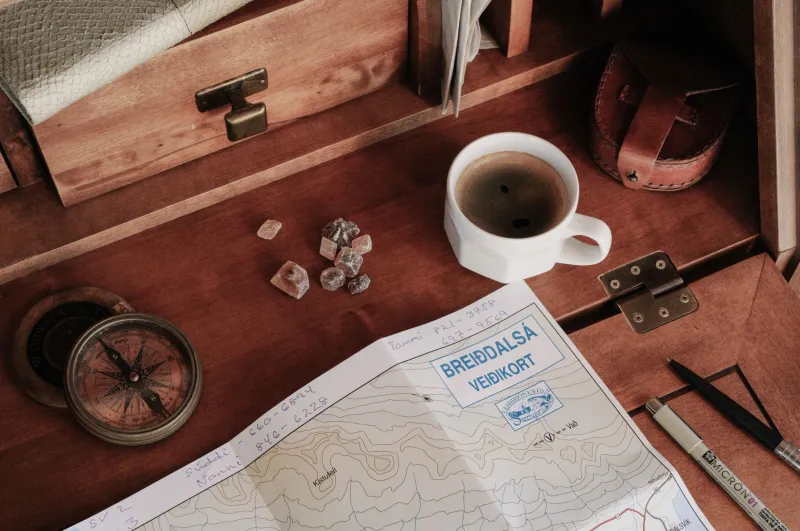
In an age when every corner of the globe is mapped, streamed, and algorithmically curated, the most thoughtful travelers are pausing to ask a fundamental question: what does it truly mean to experience the world through analog versus digital means? Understanding the distinction — and the deliberate interplay between the two — has become one of the defining marks of sophisticated, intentional travel.
Defining the Terms: A Foundation for the Discerning Mind
At its most fundamental level, analog refers to information or experience that exists on a continuous, physical spectrum — the kind that flows through the material world without interruption or conversion. Think of the hand-drawn map a Florentine concierge sketches on hotel stationery, the worn leather journal in which a seasoned traveler records impressions of Kyoto at dusk, or the mechanical tick of a Swiss timepiece measured against the silence of an Alpine morning. Analog experience is tactile, immediate, and irreducibly human.
Digital, by contrast, refers to information encoded in discrete units — binary values of ones and zeros — that can be processed, transmitted, and reproduced with extraordinary precision and speed. Your smartphone's navigation application, a curated playlist streamed at 30,000 feet, a reservation confirmed through an AI-powered concierge platform: these are all expressions of the digital paradigm.
The terms themselves carry long histories. "Analog" derives from the Greek analogos, meaning proportionate or corresponding — a fitting etymology for a mode of experience that mirrors the continuous, unbroken nature of reality itself. "Digital" comes from the Latin digitus, or finger, a reference to the earliest human counting tools. Together, they describe the two primary languages through which modern civilization — and modern travel — encodes and transmits meaning.
Why the Distinction Matters to the Luxury Traveler
For the affluent American traveler accustomed to seamless, high-touch experiences, the analog-digital distinction is far more than a technical curiosity. It is a philosophical framework that shapes the very texture of a journey.
Consider the difference between consulting a beautifully produced, leather-bound guidebook — the kind once commissioned exclusively for members of private exploration clubs — and scrolling through a crowdsourced review platform on a tablet. Both deliver information about a destination. Yet one invites contemplation, rewards patience, and carries the authority of considered editorial judgment. The other offers immediacy, breadth, and the democratic noise of ten thousand unfiltered opinions.
Neither is inherently superior. The most refined travelers understand that wisdom lies in knowing which mode of engagement the moment demands.
The Analog Experience: Presence as a Form of Luxury
There is a reason that the world's most exclusive resorts — from a private villa on the Amalfi Coast to a remote lodge in Montana's Beartooth Mountains — are increasingly designing analog experiences into their programming. Fly-fishing, letterpress printing workshops, hand-drawn botanical illustration, and guided journal writing retreats are not nostalgic affectations. They are considered responses to a profound cultural hunger.
When we engage with the world analogically, we slow down. We accept the limitations of physical media — the ink that smudges, the map that cannot be zoomed, the record that must be turned over — as invitations to be fully present. For the discerning traveler who has already acquired every material comfort, presence itself becomes the ultimate luxury.
The analog mode also fosters a particular kind of memory. Neuroscientists have long observed that experiences encoded through physical, multisensory engagement tend to be richer and more durable than those mediated through screens. The traveler who sketches a Parisian roofline by hand will carry that afternoon differently than one who photographs it and moves on.
The Digital Experience: Precision, Access, and the Art of Curation
And yet, to romanticize the analog at the expense of the digital is its own form of affectation. The digital world has democratized access to extraordinary knowledge and, in the hands of a discerning traveler, it can serve as an instrument of remarkable precision.
Private jet charter platforms that respond within minutes. AI-powered itinerary tools that cross-reference climate data, local festival calendars, and personal preference profiles. Real-time translation applications that dissolve language barriers in a Marrakech souk or a Tokyo izakaya. These are not distractions from authentic travel — they are enablers of it, when deployed with intention and restraint.
The key distinction that separates the sophisticated digital traveler from the merely connected one is curation. Rather than surrendering to the full torrent of digital noise, the discerning traveler selects digital tools the way one selects luggage: with care, with purpose, and with a clear sense of what will be carried and what will be left behind.
Living Between the Two: The Philosophy of the Hybrid Journey
Perhaps the most elegant insight available to the modern luxury traveler is this: the analog and the digital are not opposites to be chosen between, but complementary registers to be orchestrated.
The traveler who books a remote ryokan in the Japanese Alps through a sophisticated digital platform — then arrives and surrenders entirely to the analog rhythms of the onsen, the kaiseki meal, and the hand-written scroll above the tokonoma — has not contradicted herself. She has demonstrated mastery of both worlds.
This hybrid sensibility is increasingly recognized among the most thoughtful members of America's travel community as a hallmark of genuine sophistication. It requires not technological literacy alone, nor romantic primitivism alone, but a cultivated judgment about when to reach for the device and when to set it down.
Practical Considerations for the Intentional Traveler
For those who wish to bring greater intentionality to the analog-digital balance of their journeys, a few guiding principles are worth considering:
-
Designate analog hours. Many experienced travelers establish specific windows — the first hour after arrival, the hour before dinner, the morning before any agenda begins — during which all digital devices are set aside entirely.
-
Invest in quality analog tools. A fine fountain pen, a well-bound journal, a detailed paper map of a single city neighborhood: these objects carry their own aesthetic pleasure and reinforce the commitment to presence.
-
Audit your digital dependencies. Before departure, examine which applications genuinely serve your journey and which merely replicate habits from home. Travel, at its finest, is an opportunity to revise ordinary patterns.
-
Seek destinations and properties that honor both. The finest luxury properties understand that their guests require both reliable, high-speed connectivity and deliberate spaces — reading rooms, gardens, meditation terraces — where the digital world recedes.
The Deeper Meaning
Ultimately, the question of analog versus digital in travel is a question about what kind of attention we wish to bring to the world. Both modes, thoughtfully employed, are expressions of respect — for the destination, for the experience, and for oneself as a traveler of genuine discernment.
To understand the meaning of analog and digital is to understand that every journey is, in part, a series of choices about how to be present. And for those who travel not merely to accumulate destinations but to illuminate their understanding of the world, those choices matter enormously.