The Living Light: Bioluminescence and the Art of Seeking Nature's Most Ephemeral Spectacle
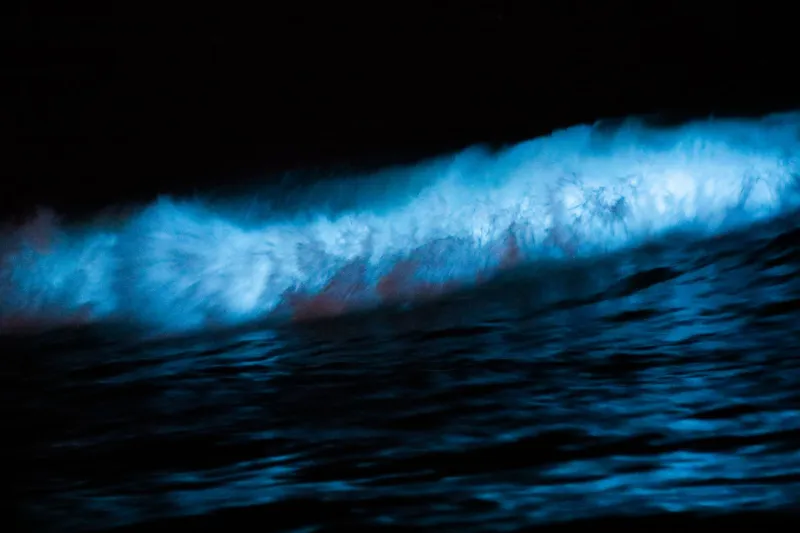
The water glows. Not with the borrowed luminescence of reflected moonlight, not with the blue-white shimmer of a swimming pool after dark, but with something that originates from within — a cold, pulsing, biological radiance that moves with the current and brightens where a paddle strikes the surface. To encounter bioluminescence for the first time is to feel, however briefly, as though the boundary between the animate and the elemental has dissolved.
This is the promise at the center of what the travel industry has begun to call bioluminescence tourism: the deliberate pursuit of places where living organisms — dinoflagellates, jellyfish, fireflies, certain species of fungi — produce light through chemical reaction. It is a phenomenon as old as life itself, and yet, for the modern traveler, it carries the quality of revelation.
The Science of the Glow
Understanding what one is witnessing adds considerable depth to the experience. Bioluminescence in aquatic environments is most commonly produced by single-celled organisms called dinoflagellates, which emit light in response to physical agitation — the motion of a boat, a swimming body, or even a gentle wave. The chemical process involves a compound called luciferin, which reacts with oxygen in the presence of an enzyme called luciferase to produce a flash of blue-green light. The effect is brief, involuntary, and, in sufficient concentration, visually staggering.
The conditions required for a genuinely dramatic bioluminescent display are specific and not always predictable. Water temperature, salinity, nutrient levels, and the absence of competing light sources all contribute to the intensity of what a visitor will observe on any given evening. This variability is not a flaw in the experience — it is, for the philosophically inclined traveler, its essential character. One does not command bioluminescence; one arrives with appropriate humility and hopes that the conditions align.
Puerto Rico's Bioluminescent Bays: The Benchmark
For American travelers, Puerto Rico represents the most accessible introduction to world-class bioluminescence. The island is home to three certified bioluminescent bays — Mosquito Bay on Vieques, Laguna Grande in Fajardo, and La Parguera in Lajas — each of which offers a distinct character and set of logistical considerations.
Mosquito Bay on Vieques is widely regarded as the most spectacular of the three, having held the Guinness World Record for the brightest bioluminescent bay. Its waters are protected within a wildlife refuge, and access is strictly regulated — a fact that has, paradoxically, enhanced its appeal for travelers who associate exclusivity with environmental integrity. Kayak tours operate under controlled conditions, with reputable operators limiting group sizes and prohibiting swimming to protect the delicate dinoflagellate population.
For the traveler who approaches Vieques as a destination in its own right rather than a day trip, the island rewards commitment. Small boutique properties, some with private beach access and farm-to-table culinary programs, allow guests to structure their visit around the bay experience while also engaging with the island's considerable natural and cultural offerings.
Ethical Dimensions of the Luminous Journey
The growing popularity of bioluminescent destinations has introduced genuine conservation pressures that the responsible luxury traveler cannot in good conscience ignore. Sunscreen compounds, insect repellents, and even the oils present on human skin have been shown to affect dinoflagellate populations when introduced into these sensitive aquatic environments. Reputable operators require guests to shower before entering the water at swim-permitted locations and prohibit the use of chemical-based products on the day of a tour.
The most ethically rigorous operators also limit tour frequency and group size, calibrating access to what the ecosystem can sustainably accommodate. For the discerning traveler, selecting an operator on the basis of these environmental commitments is not merely a moral consideration — it is a practical one. The continued existence of these experiences depends entirely on the health of the ecosystems that produce them.
This is, in a sense, the central philosophical tension of bioluminescence tourism: the desire to witness something wild and living must be balanced against the awareness that the act of witnessing carries its own consequences. The most sophisticated travelers navigate this tension not by withdrawing from the experience, but by engaging with it at the highest level of intentionality.
Beyond the Known: Lesser-Celebrated Destinations
For travelers who have already encountered Puerto Rico's luminous bays and seek less-trafficked alternatives, a number of remarkable destinations merit consideration. The Torrey Pines coastline north of San Diego occasionally produces bioluminescent surf conditions during warm-water months — a phenomenon driven by red tide blooms of the dinoflagellate Lingulodinium polyedra. Unlike the stable bay environments of the Caribbean, California's bioluminescent surf is entirely unpredictable, appearing without notice and dissipating within days. Tracking it requires local knowledge and a willingness to respond quickly — qualities that some travelers find more appealing than a scheduled tour.
The Thousand Islands region of the St. Lawrence River, straddling the US-Canada border, offers bioluminescent conditions in late summer that remain largely unknown to mainstream travel audiences. Access via private charter provides both intimacy and flexibility, and the surrounding landscape — historic estates, forested islands, and the architectural drama of Boldt Castle — provides a richly layered context for an extended journey.
Planning for the Ephemeral
Bioluminescent travel rewards preparation without guaranteeing outcomes, and this is perhaps its most instructive quality. The traveler who approaches it with rigid expectations will find the experience frustrating; the one who arrives with genuine curiosity and a tolerance for nature's indifference to human schedules will find it transformative.
Practical planning should account for lunar cycles — new moon periods produce the darkest conditions and the most vivid displays — as well as seasonal water temperatures and local ecological conditions. Consulting directly with established operators, rather than relying on aggregated booking platforms, provides access to the nuanced, current-conditions knowledge that distinguishes a memorable evening from a disappointing one.
Ultimately, the pursuit of bioluminescence is a pursuit of something that cannot be purchased outright — only sought with care, encountered with gratitude, and remembered with the particular clarity that accompanies experiences that were never entirely within one's control. In this sense, it is among the most honest of luxury travel's many offerings.