La Boule et Le Monde: What the French Call Bocce and Why the Distinction Matters to the Cultured Traveler
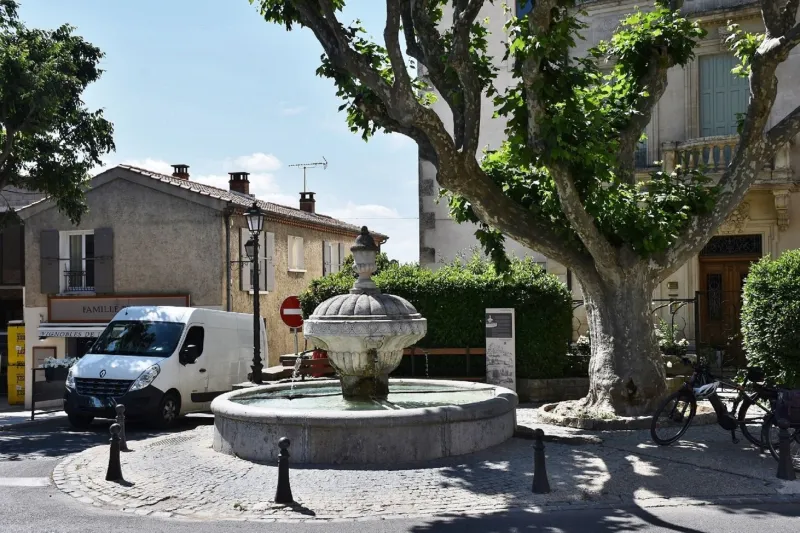
There is a scene that plays out across the south of France with such regularity that it has become almost emblematic of a certain idea of European leisure: a group of men — and increasingly, women — gathered beneath the shade of a plane tree, tossing metal balls toward a small wooden target with an air of studied nonchalance. The sound of steel on steel, the murmur of strategic debate, the occasional eruption of Gallic commentary — it is a tableau that has seduced American travelers for generations.
But what, precisely, are they playing? And why does the answer matter to the traveler who wishes to engage authentically with French culture rather than merely observe it from a respectful distance?
The Name, and the Nuance Behind It
The game that Americans most commonly call "bocce" — a word derived from the Italian boccia, meaning ball — is known in France by a different name entirely: pétanque. The French also use the broader term boules, which refers generically to any of several related ball-tossing games that have deep roots in Mediterranean culture.
Pétanque (pronounced pay-TONK) is the most widely played variant in France today, and it is the game most visitors will encounter in the town squares, parks, and seaside esplanades of the French south. It takes its name from the Provençal phrase pès tancats, meaning "feet together" or "feet fixed" — a reference to the rule that players must keep both feet together and stationary within a small circle when throwing.
This is a meaningful distinction from Italian bocce, in which players are permitted a running approach. Pétanque's enforced stillness gives it a different character entirely — more meditative, more dependent on precision of wrist and arm than on momentum.
A Brief History of the Game
Pétanque as it is known today was formalized in 1907 in La Ciotat, a coastal town east of Marseille on the French Riviera. The story goes that a local champion named Jules Lenoir, suffering from rheumatism that prevented him from taking the running approach required by the older game of boule lyonnaise, persuaded his colleagues to adopt the feet-fixed rule so that he might continue to play. The simplified format proved so appealing that it spread rapidly across Provence and beyond.
The Fédération Française de Pétanque et Jeu Provençal, founded in 1945, today oversees the sport across France, and international competitions draw players from across Europe, North Africa, and Southeast Asia — regions where French colonial influence carried the game in the 19th and 20th centuries.
For the historically minded American traveler, pétanque is thus not merely a game but a lens through which to view French social history, the culture of the Mediterranean south, and the remarkable way in which simple pleasures can travel across centuries and continents.
Pétanque vs. Bocce: The Traveler's Guide to the Differences
For those who have played bocce at American backyard gatherings or resort properties, understanding the distinctions will enrich your experience when you encounter pétanque in France:
The balls. Pétanque uses hollow metal boules, typically weighing between 650 and 800 grams. Bocce balls are traditionally made of resin or wood and are somewhat larger. The metal boules of pétanque produce that distinctive ringing clang that is so characteristic of the game's soundscape.
The throwing stance. As noted, pétanque requires feet together and stationary. Bocce permits movement.
The target. Both games use a small target ball — called the cochonnet (little pig) or jack in pétanque, and the pallino in bocce.
The terrain. Pétanque is traditionally played on rough, unpaved ground — the graveled squares of Provençal villages, the packed earth of a Riviera esplanade. The irregularity of the terrain is part of the game's character, demanding that players read the ground as carefully as they read their opponents.
Where to Play in France: The Luxury Traveler's Selection
For the Wanderluce reader who wishes to engage with pétanque as more than a spectator sport, several exceptional experiences await:
Place des Lices, Saint-Tropez. Perhaps the most glamorous pétanque venue in the world, this shaded square in the heart of Saint-Tropez has hosted games since the 19th century. On weekend mornings, the serious players arrive early; by midday, the atmosphere is convivial enough to welcome curious visitors.
Cours Mirabeau, Aix-en-Provence. The grand boulevard of Aix offers numerous opportunities to observe — and with the right introduction, join — local games beneath its famous canopy of plane trees.
The Boulodrome at Domaine de Fontenille. This celebrated Luberon property offers guests the opportunity to learn pétanque in a setting of extraordinary Provençal beauty, complete with expert instruction and properly weighted boules.
The Deeper Invitation
To ask what the French call bocce is, in a sense, to ask something larger: what does this place call its pleasures, and can I enter into them honestly? The discerning traveler who learns the word pétanque, who understands its history and its rules, who arrives at a village square with genuine curiosity rather than the posture of a tourist — this traveler is offered something that no reservation can secure: the possibility of being, if only for an afternoon, genuinely present in another culture.
That, in the end, is the highest form of luxury travel has to offer.