The Hidden Calendar: How the World's Most Discerning Travelers Are Unlocking Destinations at Their Most Authentic
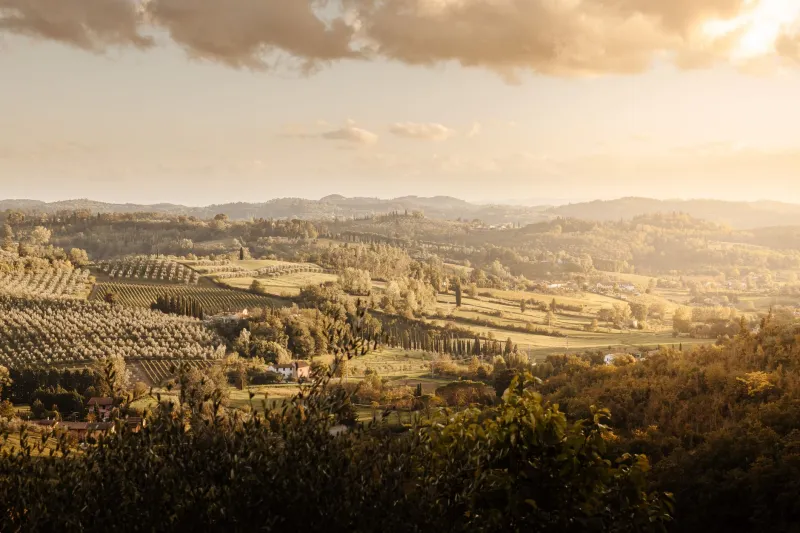
Every destination presents two versions of itself. The first is the one that appears in the glossy spreads and the algorithmically optimized travel guides: sunlit, fully staffed, and populated by tens of thousands of visitors all arriving at precisely the same moment for precisely the same reasons. The second version is quieter, more layered, and infinitely more revealing. It belongs to those who know when to arrive.
Among the world's most traveled and most thoughtful wanderers, the question of when has begun to matter as much as where. Strategic seasonal planning—not merely the avoidance of crowds, but the deliberate alignment of one's journey with the authentic rhythms of a destination—has emerged as one of the defining characteristics of sophisticated travel in this decade.
Why Peak Season Is a Luxury Trap
There is a persistent and understandable assumption that peak season represents the best version of a destination. The weather is reliable, the attractions are fully operational, and the sheer number of visitors seems to validate the choice. For the affluent traveler, however, peak season increasingly represents a paradox: one pays the highest prices for the least exclusive experience.
The Amalfi Coast in August, Santorini over the Fourth of July holiday, or Kyoto during cherry blossom season all share a common condition: they have been temporarily transformed into something closer to a curated spectacle than a living place. The authenticity that drew discerning travelers to these destinations in the first place—the local rhythms, the unhurried character, the genuine exchange between visitor and place—is precisely what peak season crowds most effectively dissolve.
The most refined travelers have recognized this, and they have responded not by abandoning beloved destinations but by learning to visit them on entirely different terms.
Reading the Hidden Calendar
Every destination operates according to what might be called a hidden calendar—a sequence of events, seasons, and cultural moments that define the place for those who actually inhabit it, rather than those who merely visit. These calendars are rarely published in mainstream travel guides. They are discovered through research, through relationships with local fixers and cultural advisors, and through the kind of genuine curiosity that distinguishes the true traveler from the tourist.
Consider the olive harvest season across the Mediterranean, which unfolds in October and November across regions of Tuscany, Provence, and the Greek countryside. These weeks offer a landscape animated by purposeful human activity, a cooler and more forgiving light, and an invitation to participate in traditions that have shaped communities for centuries. The crowds that define these same regions in summer have retreated entirely. Restaurants return to their local clientele. Hoteliers have time to engage. The destination exhales.
Or consider the lesser-known festival calendar of Japan beyond the famous sakura season. The Gion Matsuri in Kyoto, held throughout July, draws far fewer international visitors than spring's cherry blossoms yet offers a far more immersive encounter with living Japanese tradition—elaborate processions, centuries-old floats, and neighborhood celebrations that invite genuine participation rather than observation from behind a camera.
In the American Southwest, the ceremonial dances held at Pueblo communities throughout the winter months offer a depth of cultural encounter that the summer tourist season, for all its accessibility, rarely provides. These events are not staged for visitors; they are living expressions of enduring traditions, and the traveler who arrives with appropriate respect and preparation encounters something of genuine rarity.
The Role of the Cultural Advisor
Navigating the hidden calendar requires intelligence that the standard travel booking platform cannot provide. This is where the most discerning American travelers have increasingly turned to a new class of specialist: the cultural travel advisor.
Distinct from the traditional luxury travel agent, the cultural advisor maintains deep, ongoing relationships with local communities, regional scholars, and destination insiders worldwide. Their value lies not in securing reservations—though they do that with considerable skill—but in understanding the precise conditions under which a destination reveals its deepest character. They know which regional wine festival in Burgundy draws serious local vignerons rather than international influencers. They know when the private gardens of English country estates are open to a very limited number of guests each spring. They know that the truffle markets of Périgord are most extraordinary on a cold Tuesday in January, when the buyers are professionals and the conversation is unguarded.
For travelers willing to invest in this level of guidance, the return is not merely a better trip. It is a fundamentally different category of experience.
Exclusivity Redefined
The luxury travel industry has long equated exclusivity with price: the most expensive suite, the most difficult reservation, the most remote private island. The hidden calendar school of thought proposes a more nuanced definition. True exclusivity, in this view, is temporal. It belongs to those who are present at the right moment—a moment that neither wealth nor status alone can manufacture.
The vineyards of Champagne during harvest are not accessible by reservation. The floating markets of Thailand at dawn are not enhanced by a premium surcharge. The aurora borealis over Iceland's interior does not perform on a schedule. These experiences reward the traveler who has done the work of understanding when, not merely the traveler who has spent the most on where.
Planning the Purposeful Year
For travelers willing to restructure their calendars around this philosophy, the practical implications are significant. It requires a longer planning horizon, a greater degree of flexibility, and a willingness to let the destination—rather than the departure date—dictate the shape of the journey.
Many of the most sophisticated American travelers now plan their annual travel calendar the way a serious collector plans acquisitions: with research, patience, and a clear sense of what they are seeking. They identify two or three seasonal moments of genuine significance—a cultural ceremony, a regional harvest, a natural phenomenon—and build their journeys outward from those fixed points.
The result is a travel year composed not of expensive vacations but of irreplaceable encounters. That distinction, ultimately, is the difference between travel that costs a great deal and travel that means a great deal.