By Scent and Sound: The Discerning Traveler's Guide to Navigating the World Through the Senses
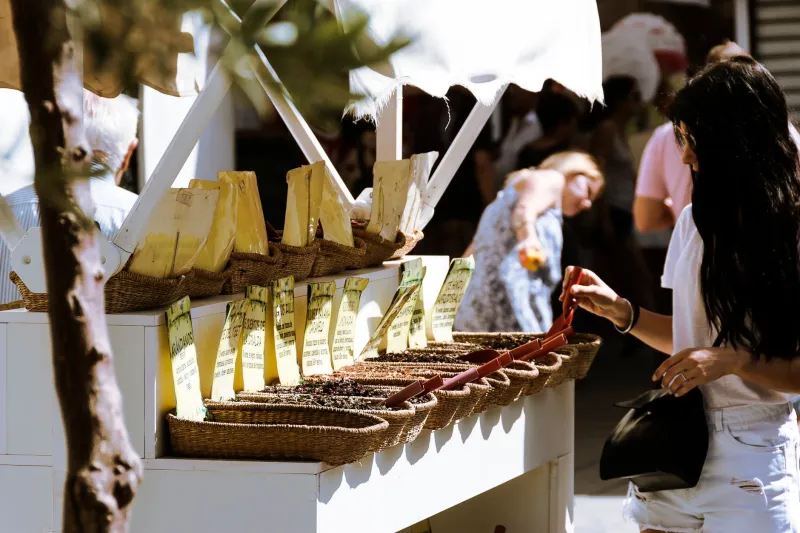
There is a moment that most experienced travelers can identify, though few can fully explain: the instant a destination becomes real. It is rarely the view from the airplane window, or the arrival at the hotel, or even the first meal. It tends to be something smaller and more immediate — a smell caught in a market alley, a sound drifting from an open window, a taste that arrives without context and lodges somewhere beneath language.
The senses, it turns out, are faster and more faithful than any map.
The Failure of the Visual Itinerary
Contemporary travel, even at its most luxurious, has become predominantly visual in its orientation. The itinerary is organized around things to see. The research is conducted through images. The documentation is photographic. Even the recommendations that circulate most widely — through travel publications, social platforms, and the informal networks of affluent American travelers — are filtered almost entirely through the lens.
This is understandable. Vision is dominant among the human senses, and the visual is the most easily communicated and shared. But it is also, paradoxically, the sense most easily deceived. A photograph of a destination conveys almost nothing of what it actually feels like to inhabit it. The image of a Marrakech souk communicates color and architecture; it communicates nothing of the layered smell of cedar, cumin, and tanned leather that makes the experience of that souk so fundamentally irreducible.
The travelers who navigate primarily by sight are, in a meaningful sense, navigating by the most edited version of a place. The senses that remain — smell, sound, taste, touch — offer something rawer, less curated, and far more honest.
Scent as Memory Anchor
Of all the senses, smell is neurologically the most direct in its relationship to memory. Unlike visual or auditory information, olfactory signals travel without relay directly to the brain's limbic system — the seat of emotion and long-term memory. This is why a particular scent can collapse years of distance in an instant, transporting the person who encounters it with a vividness that no photograph achieves.
For the discerning traveler, this neurological reality is not merely interesting — it is actionable.
A growing number of luxury travelers are approaching scent with the same intentionality they bring to dining or cultural programming. In Grasse, France — the historic capital of the world's perfume industry — private ateliers offer sessions with master perfumers that go far beyond the commercial nose experience. These are conversations about raw materials, about regional terroir, about the way the lavender grown on a specific hillside at a specific altitude produces a compound that cannot be replicated elsewhere. Travelers who engage at this level carry something home that no boutique purchase provides: a sensory vocabulary for a place.
In Japan, the ancient practice of kōdō — the art of listening to incense — offers a similarly immersive entry point. Practitioners learn to identify woods, resins, and blended compositions through scent alone, developing a sensitivity that, once acquired, changes the way they experience every fragrant environment they subsequently encounter.
The traveler trained in this way does not simply smell a destination. They read it.
Sound as Cultural Cartography
Every place has an acoustic signature. The particular quality of silence in a high-altitude Andean village — that thin, windswept quiet broken only by the distant movement of animals — is as distinct and place-specific as any landscape feature. The layered urban sound of a New Orleans morning, with its competing rhythms of church bells, streetcar wheels, and someone practicing trumpet in a second-floor window, is a document of that city's history as rich as any archive.
Sophisticated travelers are increasingly seeking out acoustic experiences with the same rigor they bring to culinary or visual pursuits. This means more than attending a concert in a celebrated venue, though that remains worthwhile. It means pursuing the acoustic character of a place in its unperformed state.
In the context of organized luxury travel, this sensibility manifests in specific ways. Travelers are requesting time in sites of exceptional acoustic architecture — Romanesque churches, natural amphitheaters, underground spaces — not to attend events but to experience the space itself in silence. They are seeking introductions to traditional musicians who perform not for audiences but for practice, in conditions that preserve the unmediated relationship between sound and space. They are choosing accommodations not only for their visual or material qualities but for what can be heard from them — the sound of a particular harbor at dawn, or a market assembling below a window, or rain on a specific kind of roof.
Taste as Testimony
The luxury dining experience has never been more elaborate or more technically accomplished. Yet the most memorable tastes that experienced travelers report are rarely from Michelin-starred kitchens. They tend to be simpler, more specific, and more deeply embedded in context.
A fig eaten from a tree in a Cretan garden at the moment of perfect ripeness. A bowl of menudo at a Mexico City market at six in the morning, surrounded by the people for whom it is not an experience but a meal. A glass of natural wine poured by the farmer who made it, in the cellar where it was made, with no label and no story except the one being told directly.
These tastes carry what might be called testimonial weight. They are not merely delicious — they are evidence. Evidence of a soil, a season, a tradition, a particular human hand. The traveler who pursues taste with this understanding is not dining. They are reading a place through its most intimate output.
For American travelers accustomed to the curated excellence of the country's finest restaurants, this shift in orientation can require deliberate recalibration. It means occasionally setting aside the reservation at the celebrated address in favor of the market stall, the family kitchen, the producer's table. It means valuing context as a flavor compound in its own right.
Building a Sensory Practice
The sensory compass is not a talent. It is a practice — cultivated through attention, intention, and a willingness to slow down enough to let the non-visual senses do their work.
For travelers who wish to develop it, the starting point is simply this: before consulting any guide or recommendation, spend the first hour of every new destination doing nothing but receiving. Walk without destination. Sit in a public space. Eat something unremarkable from a street stall. Listen to what the place sounds like when it is not performing for visitors.
What arrives in that hour — the impressions formed before the itinerary reasserts itself — is often the most accurate and the most lasting portrait of where one actually is.
The world, navigated by scent and sound and taste, is a different world than the one mapped by sight alone. It is older, more layered, and, for those willing to attend to it, considerably more illuminating.