Where the Stars Rule: The Rise of Dark Sky Sanctuaries as the Pinnacle of Luxury Travel
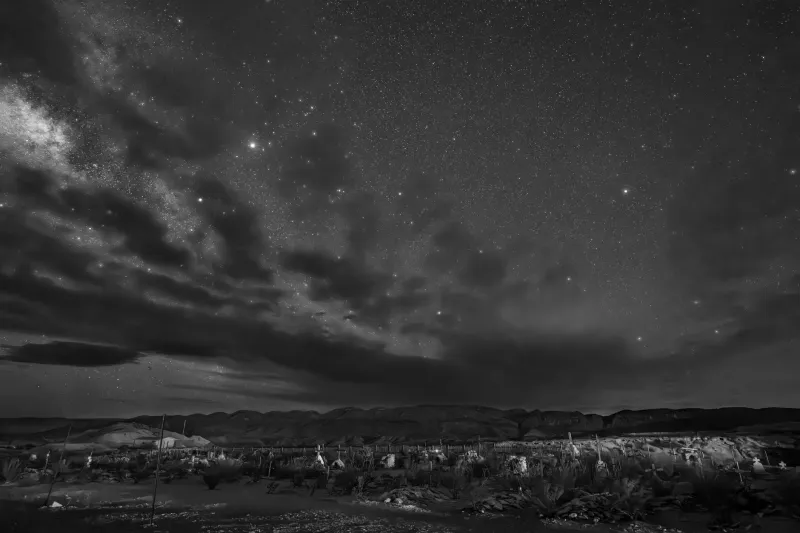
There is a particular kind of darkness that money cannot manufacture. It cannot be installed in a penthouse suite, commissioned by a designer, or approximated by any technology currently in existence. It is the darkness of a sky entirely free from human interference—a velvet expanse in which the Milky Way does not merely appear but dominates, stretching horizon to horizon in a display so overwhelming that first-time witnesses frequently describe it as disorienting, even emotional.
This is precisely why certified dark sky destinations have become the quiet obsession of affluent travelers across the United States and beyond. Where once the ultimate luxury was proximity to light—the glittering skylines of Manhattan, the chandelier-lit dining rooms of Paris—the new measure of privilege is its complete and deliberate absence.
The Science of Darkness
The International Dark-Sky Association (IDA) has certified fewer than 200 dark sky places worldwide, a number that underscores just how rare genuine celestial darkness has become. Bortle Scale measurements—the standard by which astronomers assess sky brightness—reveal that more than 99 percent of the United States population lives under light-polluted skies. A Bortle Class 1 sky, the darkest designation possible, exists in only the most remote corners of the earth.
For the traveler accustomed to commanding the finest of everything, the pursuit of a Class 1 sky represents an entirely new category of acquisition: not an object, not a service, but an atmospheric condition. It must be earned through geography, timing, and intention—qualities that, in the luxury travel world, translate directly into exclusivity.
The science matters because it informs the experience. In true dark sky conditions, the human eye undergoes a process called dark adaptation, requiring up to forty minutes to achieve full sensitivity. During this window, the world around a traveler slowly reveals itself in extraordinary detail—not just stars, but satellites in orbit, the faint smudge of neighboring galaxies, and meteor showers invisible to those who have never waited long enough to see them.
Destinations That Command the Night
The geography of darkness is surprisingly diverse, and the world's most thoughtful hospitality brands have begun to recognize this. In the American Southwest, the Natural Bridges National Monument in Utah holds the distinction of being the first IDA-certified International Dark Sky Park in the world. Nearby, the remote mesa landscapes of New Mexico—particularly around the Valles Caldera National Preserve—offer conditions that rival anywhere on earth.
Beyond American borders, Namibia's NamibRand Nature Reserve, one of Africa's largest private reserves, has earned Dark Sky Reserve status while simultaneously housing some of the continent's most architecturally refined safari lodges. Guests sleep in open-air suites deliberately oriented toward the southern hemisphere sky, where constellations entirely unfamiliar to Northern visitors create an additional layer of wonder.
In the Southern Hemisphere, Chile's Atacama Desert has attracted not only the world's foremost observatories but an increasingly sophisticated cohort of luxury properties. The Elqui Domos resort, for instance, offers transparent dome accommodations specifically designed to frame the night sky from a horizontal position—a detail that speaks to the growing intersection of architectural intention and astronomical experience.
Closer to home, the remote reaches of Montana's Big Sky Country, particularly areas bordering Glacier National Park, offer accessible darkness for American travelers unwilling to cross an ocean. Several private guest ranches in the region have quietly invested in astronomer partnerships and telescope installations, transforming what was once a rustic afterthought into a signature evening program.
How Luxury Hospitality Is Reimagining the Night
The most forward-thinking properties are no longer content to simply point guests toward the sky. They are constructing entire nocturnal philosophies around the experience. Private astronomers on staff—once a curiosity—are becoming standard at the highest tier of dark sky properties. These resident experts do not merely operate equipment; they narrate the cosmos with the kind of contextual depth that transforms observation into education.
Curated pre-experience rituals have also emerged as a meaningful differentiator. Some properties ask guests to observe a screen-free period beginning at sunset, allowing the nervous system to disengage from digital stimulation before the sky darkens. Others offer guided meditation sessions conducted under open skies, framing the astronomical experience as a form of mindfulness practice rather than spectacle.
The culinary dimension has not been overlooked. Intimate after-dark dining experiences—tables set in clearings, illuminated only by candlelight or low-spectrum red lighting that preserves night vision—have become signature offerings at properties from Patagonia to Iceland. The meal becomes inseparable from the sky above it, each course timed to coincide with the rising of a particular constellation or the peak of a predicted meteor shower.
Darkness as Digital Detox
There is a deeper cultural logic at work in the rise of dark sky travel, one that resonates with particular force among American travelers who have grown weary of hyperconnectivity. The deliberate removal of screens, artificial lighting, and wireless signals—necessities in any genuine dark sky environment—creates a form of enforced presence that no wellness retreat can fully replicate.
In a landscape where digital detox has become its own luxury category, the dark sky destination offers something more primal: a confrontation with scale. Standing beneath a sky containing two hundred billion stars in the Milky Way alone, the trivialities of inbox management and social media curation lose their grip with remarkable speed. Guests consistently report that the experience recalibrates their sense of proportion in ways that linger long after they return home.
This is, perhaps, the most honest articulation of what dark sky travel offers the affluent wanderer: not merely a beautiful view, but a fundamental shift in perspective. The night sky does not care about net worth or social standing. It extends the same incomprehensible grandeur to every upturned face beneath it. And in that radical democracy of wonder, something genuinely luxurious is found—the experience of being, for once, simply small.